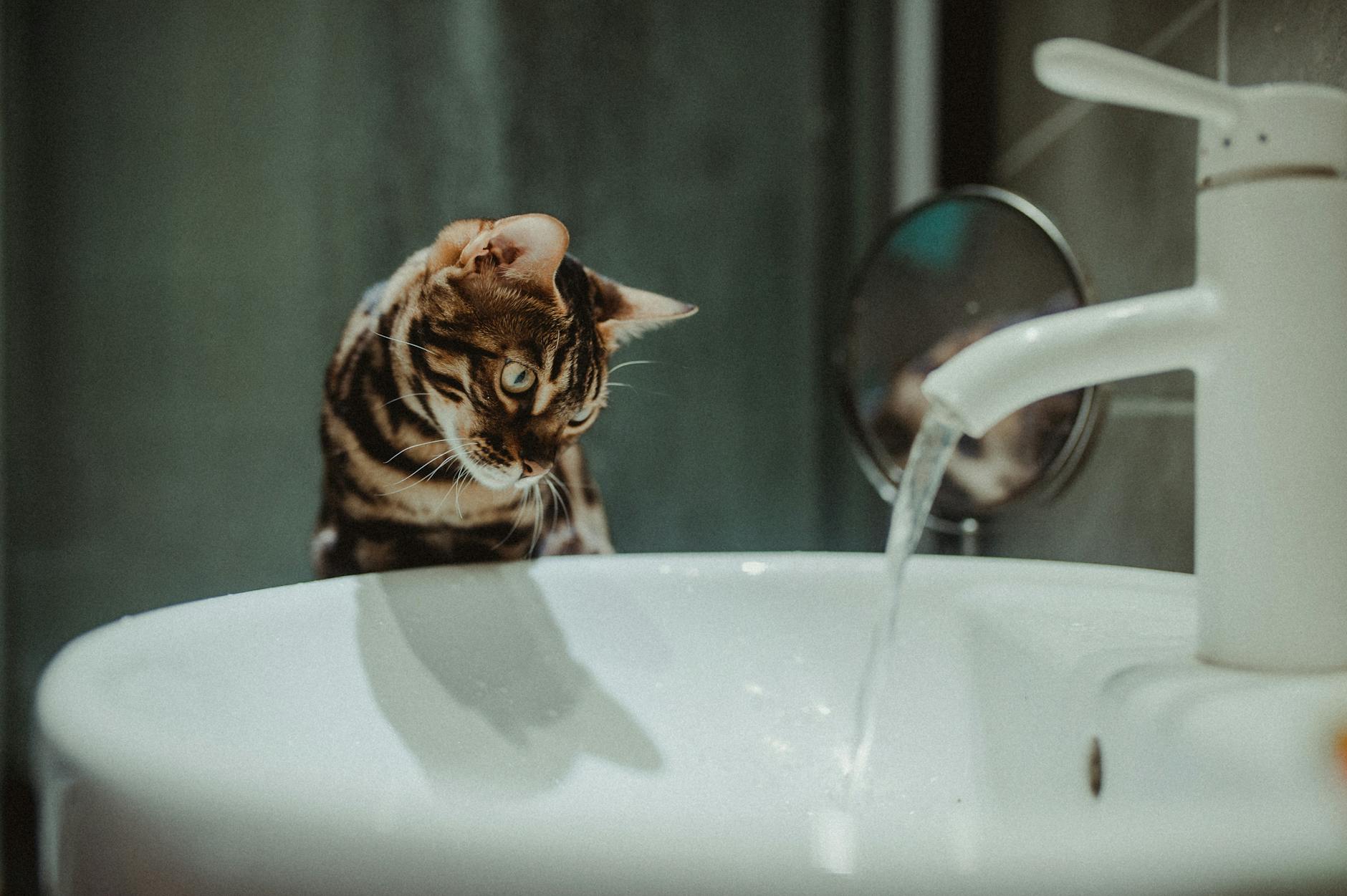
Yes, it is generally safe for cats to drink from your bathroom sink, provided the water is clean and free of chemical contaminants. Most cats naturally gravitate toward moving water sources, and bathroom sinks offer fresh, cool water that appeals to their instinctive preference for flowing water over stagnant sources. For example, a cat that consistently drinks from the bathroom sink may actually be exhibiting healthy hydration behavior, as they’re seeking out what they perceive as a fresher water source than a still water bowl. However, “safe” comes with important caveats.
The safety depends entirely on what’s in your sink, what cleaning products have been used recently, and how often you actually use the sink for personal hygiene. A sink rinsed regularly with water alone poses minimal risk, but a sink treated with bleach, harsh cleaners, or where toothpaste residue lingers can expose your cat to toxic substances. Understanding these variables will help you decide whether to encourage, tolerate, or discourage this behavior in your home. The reason cats are drawn to sinks in the first place relates to their evolutionary preference for moving water—in the wild, flowing water is typically fresher and safer than stagnant pools. Your bathroom sink taps into this instinct, which is why many cats will persistently request water from the tap rather than drinking from their bowl.
Table of Contents
- Understanding Why Cats Prefer Bathroom Sinks to Water Bowls
- Health Risks From Bathroom Sink Chemicals and Contaminants
- Bacterial and Parasitic Considerations
- Encouraging Hydration Through Alternative Running Water Sources
- Risk Factors That Increase the Danger of Sink Water
- Signs Your Cat Has Experienced Contamination or Illness
- Creating a Cat-Safe Bathroom Environment
- Conclusion
- Frequently Asked Questions
Understanding Why Cats Prefer Bathroom Sinks to Water Bowls
cats have a documented preference for running water over still water, a behavior rooted in their wild ancestors who avoided stagnant water sources where bacteria and parasites accumulated. A cat drinking from a bathroom sink is often following this evolutionary programming, seeking what appears to be a safer, fresher water source. This preference isn’t arbitrary—studies of cat hydration show that cats who have access to running water sources tend to drink more overall, which supports better kidney and urinary tract health over their lifetime. The bathroom sink also offers practical advantages from a cat’s perspective.
The water is cold, continuously refreshed, and available on demand when the cat learns to trigger the faucet or when you’re willing to turn it on. Compare this to a stationary water bowl that sits at room temperature, potentially develops a film on the surface, and accumulates dust and debris—from a cat’s sensory standpoint, the sink is objectively a more appealing water source. Some cats even develop a preference strong enough that they’ll ignore a fresh bowl of water placed beside their food, preferring instead to wait for access to the sink. This behavior is so common that cat behaviorists consider it entirely normal. It’s not a sign of illness or behavioral problems, though it can become inconvenient if your cat demands sink access at odd hours or interferes with your bathroom routine.
Health Risks From Bathroom Sink Chemicals and Contaminants
The primary concern with allowing cats to drink from bathroom sinks is chemical exposure. Bathroom environments accumulate residues from soaps, shampoos, toothpaste, mouthwash, and cleaning products—all of which can be toxic to cats in varying concentrations. Even small amounts of certain substances can cause problems: toothpaste containing xylitol, for instance, is highly toxic to cats and can cause rapid insulin release and liver damage. Bleach-based bathroom cleaners, if not rinsed away thoroughly, can irritate a cat’s mouth and digestive tract.
A significant limitation to consider is that many people use their bathroom sinks for personal grooming without thinking about afterward rinsing them thoroughly for pet safety. You might wash your face with a gentle cleanser or brush your teeth and consider the sink adequately clean, but microscopic residues remain. If your household uses harsh chemical cleaners on the sink or tub regularly, the risk escalates—even if you rinse the sink before your cat drinks from it, traces of these chemicals can persist in the pipe drains and on the faucet handle. The risk is further complicated by the fact that cats will often drink from areas you haven’t specifically cleaned. A cat might drink from the overflow hole or even lick the faucet handle, both of which accumulate bacteria, soap residue, and other contaminants more readily than the basin itself.
Bacterial and Parasitic Considerations
While bathroom sink water comes from the same municipal or well system as your tap water—and is therefore subject to the same safety standards as your drinking water—the sink itself is not a sterile environment. The basin, pipes, and faucet handle harbor bacteria that accumulate from daily use and moisture. A cat drinking from the sink is exposed to biofilm buildup on the faucet aerator and bacteria colonies that thrive in the damp environment, even in a well-maintained bathroom. For a specific example, consider a bathroom sink that hasn’t been deep-cleaned in several months. The aerator (the small screen on the faucet tip) becomes a breeding ground for bacteria, and water passing through it picks up these microorganisms.
A cat with a compromised immune system, a kitten, or a senior cat is at higher risk of developing gastrointestinal upset from these bacterial exposures. Immunocompromised cats might develop infections that a healthy adult cat would fight off easily, making sink water a riskier choice for vulnerable populations. Parasites are a less common but still relevant concern. If someone in your household has parasites like giardia, and hasn’t practiced meticulous handwashing after bathroom use, trace amounts could theoretically contaminate the sink. While this scenario is unlikely in most homes, it’s a reminder that bathroom sinks are not sterilized environments.
Encouraging Hydration Through Alternative Running Water Sources
If your cat loves running water but you’re concerned about bathroom sink safety, you have practical alternatives that provide the same appeal without the chemical exposure risk. Cat water fountains designed specifically for pets circulate fresh, filtered water continuously—they satisfy your cat’s preference for moving water while eliminating most bacterial and contaminant concerns. Many cats find fountain water equally appealing to sink water, and the convenience factor is significant: you don’t need to turn on the tap for your cat at 3 a.m. The tradeoff with water fountains is upfront cost and maintenance. A decent cat fountain ranges from $30 to $100, and they require regular cleaning and filter replacement to function optimally.
However, when compared to potential veterinary bills from a cat that becomes dehydrated because it refuses to drink from a static bowl, or health complications from chemical exposure, the investment is reasonable. Some cats transition easily to fountains, while others remain fixated on their bathroom sink—persistence and multiple fountain placements may be necessary. Another alternative is simply turning on the bathroom tap for your cat at designated times, which gives you control over when and where they drink. This approach lets you ensure the sink was recently rinsed, you know what cleaning products were last used there, and you can monitor the water quality directly. It’s more labor-intensive than a fountain, but it eliminates the mystery of what your cat is consuming.
Risk Factors That Increase the Danger of Sink Water
Certain households face elevated risks from allowing cats to drink sink water. If you use strong chemical cleaners in your bathroom—bleach-based tile cleaners, mold removers, or heavy-duty disinfectants—the risk increases substantially, even with thorough rinsing. These products can leave residues that aren’t visible or easily rinsed away, and they accumulate on sink surfaces over time. Bleach exposure in cats can cause vomiting, abdominal pain, and in severe cases, damage to the esophagus and digestive tract. Toothpaste is another common culprit.
Fluoride toothpaste in large quantities isn’t ideal for cats, and xylitol-containing toothpaste is genuinely dangerous. If someone in your household uses xylitol-containing toothpaste and doesn’t rinse the sink meticulously after brushing, your cat could be exposed to traces of this toxin. Even if the risk seems low, the potential consequences—hypoglycemia, liver failure—make this a genuine concern worth taking seriously. A warning for multi-pet households: if you have other animals that use your bathroom sink area, or if you have guests using your bathroom with their own products, the number of variables increases and the risk becomes harder to control. You lose visibility into what’s being used on or around that sink.
Signs Your Cat Has Experienced Contamination or Illness
If your cat regularly drinks from the bathroom sink and begins showing symptoms of illness, you should consider the sink as a potential source. Signs of chemical poisoning or bacterial contamination can include vomiting, diarrhea, loss of appetite, lethargy, or excessive drooling. A cat that suddenly stops eating its regular food but continues seeking the sink might be experiencing nausea from contamination, or it might have simply developed a stronger preference for sink water—distinguishing between the two requires veterinary evaluation.
For a practical example: if your cat vomits after drinking sink water for the first time in a new home or after your household switches to a new bathroom cleaner, the connection is likely real. Gastrointestinal symptoms appearing within 1-4 hours of sink water consumption are more suspicious than symptoms appearing days later. If you notice this pattern, stop allowing sink access immediately and consult your veterinarian, especially if the symptoms persist.
Creating a Cat-Safe Bathroom Environment
The path forward depends on your cat’s behavior, your home’s chemical inventory, and your comfort level with risk. If your cat has free access to your bathroom sink and you use only mild soaps and water there, regularly rinsing the sink thoroughly, the risk is minimal. However, if your bathroom is a repository for cleaning chemicals, toothpaste, medications, and other bathroom products, restricting sink access is the safer choice.
As cat owners become increasingly aware of feline preferences for running water, the market for cat-safe hydration solutions continues to expand. The future of feline hydration in homes is moving toward purpose-built fountains and automatic systems that replicate the appeal of sinks without the chemical risks. Whether you choose to embrace this shift or continue allowing bathroom sink access, the key is making an informed decision based on your specific household conditions.
Conclusion
Bathroom sinks are safe for cats to drink from in principle, but the practical safety depends entirely on what chemicals, cleaning products, and residues your bathroom contains. A sink used primarily for simple water-based washing poses minimal risk, while a sink that regularly comes into contact with toothpaste, bleach, mold removers, or harsh cleaners becomes a genuine hazard.
The best approach is honest assessment: evaluate your bathroom cleaning practices, the products you use, and how thoroughly you rinse your sink, then make a decision based on that reality rather than assuming bathroom water is automatically clean enough for your cat. If you want to support your cat’s natural preference for running water without the risks associated with your bathroom sink, water fountains and scheduled tap-water sessions offer excellent alternatives. Regardless of which option you choose, the goal is ensuring your cat stays well-hydrated with water that truly is safe—which is ultimately what matters for their long-term health and wellbeing.
Frequently Asked Questions
Can cats get sick from drinking bathroom sink water?
Yes, depending on what’s in your sink. Exposure to cleaning product residues, toothpaste, or bacterial buildup can cause vomiting, diarrhea, or more serious symptoms. The risk level depends on your specific bathroom practices and products.
Is filtered bathroom sink water safer for cats than tap water?
Your bathroom sink water comes from the same source as your regular tap water, so water quality isn’t the issue—contamination from sink surfaces and products is. A whole-house water filter doesn’t address bathroom sink contamination from soaps and cleaners.
How can I tell if my cat prefers sink water for a health reason versus just preference?
Cats naturally prefer running water due to instinct, not because still water is unhealthy. If your cat has a choice between a water fountain and a static bowl, they’ll likely choose the fountain or sink regardless of health status. Health concerns would manifest as illness symptoms, not just water preference.
Are some cats more at risk from bathroom sink water than others?
Yes. Kittens, senior cats, cats with kidney disease, and immunocompromised cats are more vulnerable to contamination. Indoor cats that have limited exposure to bacteria may also be more susceptible to illness from unfamiliar contamination.
What’s the safest way to let my cat drink from the sink?
Turn on the faucet for your cat at specific times, ensuring the sink was recently rinsed and only mild products were last used. Avoid this practice if your household uses harsh chemicals in the bathroom. A water fountain is a safer alternative if you’re concerned.
Should I stop my cat from drinking sink water?
It depends on your bathroom’s chemical use. If you use only mild cleansers and rinse regularly, occasional sink drinking is likely harmless. If you use strong chemicals or if your cat seems ill, stopping sink access is the prudent choice.