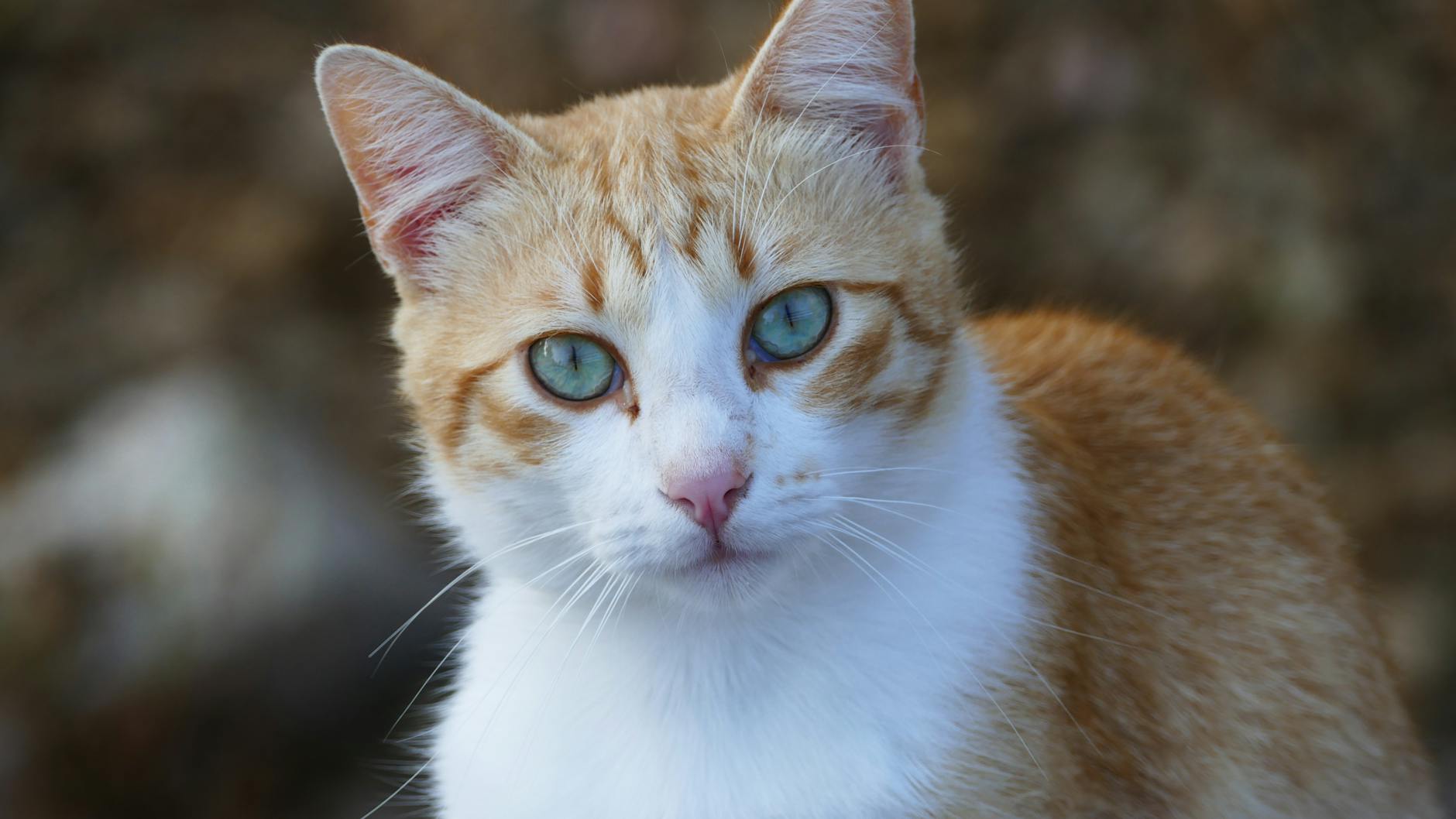
Identifying a blue-eyed cat breed requires examining multiple physical characteristics beyond eye color alone, as blue eyes appear in numerous breeds with distinctly different body types, coat patterns, and facial structures. While blue eyes are certainly a notable trait in cats like Siamese, Ragdoll, and Tonkinese breeds, eye color alone cannot definitively identify your cat’s breed since some domestic shorthairs and mixed-breed cats can also inherit blue eyes. The most reliable approach involves combining your cat’s eye color with its coat pattern, body structure, ear shape, and fur length to narrow down the possibilities.
A practical example: if you have a pointed cat (darker coloring on the face, ears, paws, and tail) with bright blue almond-shaped eyes and a slender, medium-length body, you’re likely looking at a Siamese or Ragdoll. However, if your blue-eyed cat has a stockier build with a flat face, pointed ears, and a dense coat, it could be a Birman or Snowshoe breed instead. Genetics plays a major role in determining whether blue eyes appear at all, and in some breeds like Ragdolls and Siamese, blue eyes are not just common but expected as part of the breed standard.
Table of Contents
- Which Cat Breeds Are Known for Blue Eyes?
- Understanding the Genetics Behind Blue Eyes in Cats
- Examining Coat Pattern and Coloring to Identify Your Cat
- Body Structure, Head Shape, and Facial Features
- Common Misidentifications and Important Limitations
- DNA Testing and Breed Verification Methods
- Connecting Blue Eyes to Your Cat’s Likely Temperament and Needs
- Conclusion
- Frequently Asked Questions
Which Cat Breeds Are Known for Blue Eyes?
Several recognized cat breeds are most commonly associated with blue eyes, though not every individual within these breeds will have them. The Siamese breed is perhaps the most iconic, known for striking sapphire-blue almond-shaped eyes paired with a sleek body and pointed coloring. Ragdolls consistently display blue eyes as adults and have a larger, more substantial frame than Siamese cats, with semi-long silky coats and a calm, docile temperament.
Other breeds that frequently feature blue eyes include Balinese (similar to Siamese but with longer fur), Tonkinese (a cross between Siamese and Burmese with aqua-colored eyes), Birman (pointed coat with white paws and sturdy build), and Snowshoe (short-haired pointed cats with distinctive white boots on their paws). Less commonly known breeds like the Ojos Azules have blue eyes as a defining trait, while some cats from breeds like the British Shorthair, Russian Blue, and even Persians can occasionally have blue eyes depending on their coloring and genetics. The key distinction is that blue eyes in some breeds like Ragdoll and Siamese are almost guaranteed, whereas in other breeds they’re more of an occasional occurrence. For example, a white British Shorthair is more likely to have blue eyes than a blue British Shorthair with gray coloring.
Understanding the Genetics Behind Blue Eyes in Cats
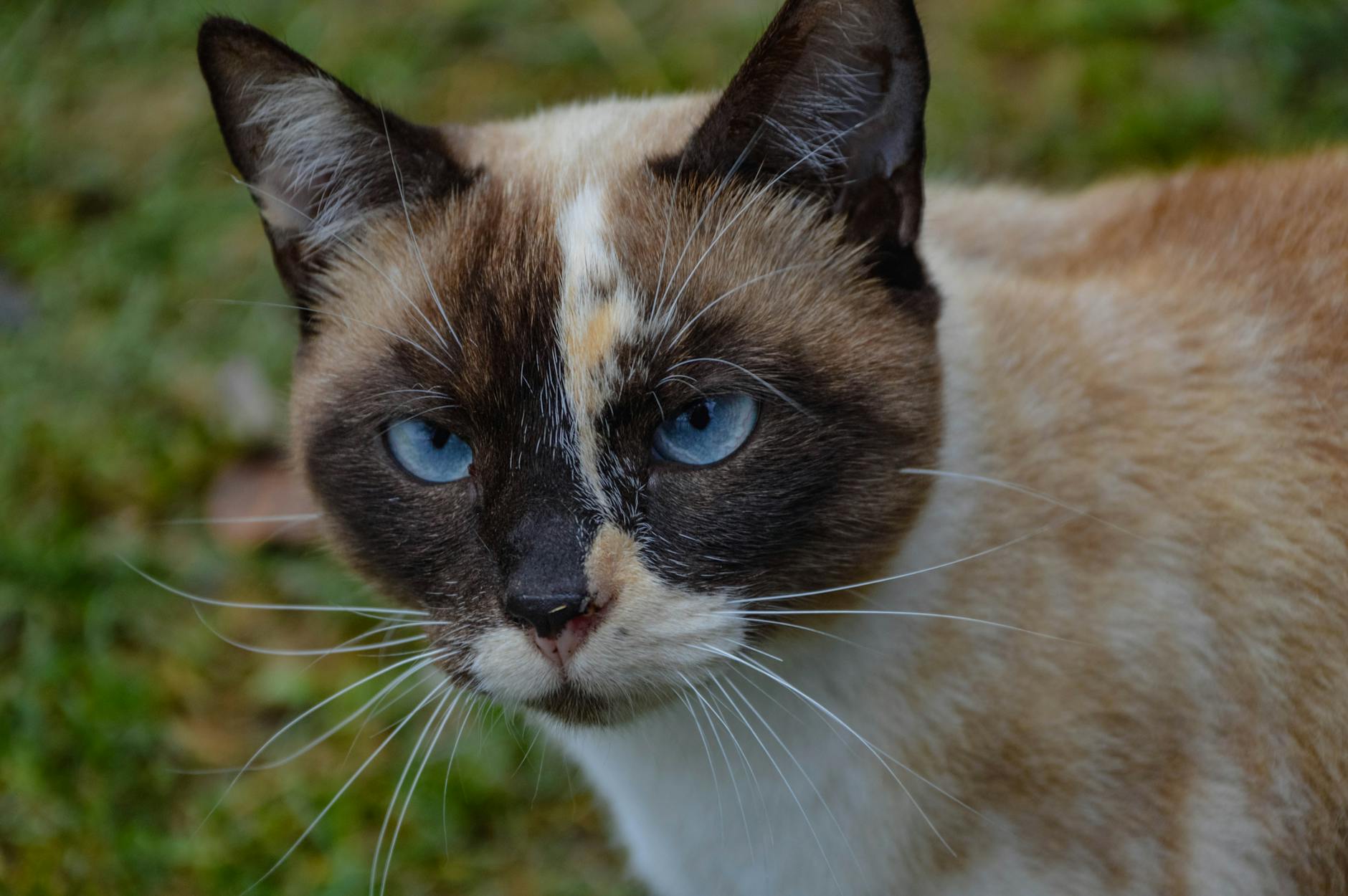
Blue eyes in cats are the result of a lack of pigment in the iris, similar to blue eyes in humans and other animals. Unlike humans, where multiple genes control eye color, blue eyes in cats are most commonly linked to the presence of the white spotting gene or point coloration genes, which reduce melanin production in the iris. Kittens of many breeds are born with blue or gray eyes, but most develop darker eyes as pigmentation increases over time, typically completing this change by four to eight weeks of age.
However, in certain breeds with the point gene or white spotting genes, blue eyes persist into adulthood. One important limitation to understand is that blue eyes in white cats, particularly those with predominantly white or entirely white coats, are often associated with deafness—a genetic correlation that breeders and owners should be aware of. If your white or predominantly white blue-eyed cat is deaf in one or both ears, this is not uncommon and doesn’t indicate any health problem with the cat itself. Another consideration is that blue eyes don’t necessarily indicate a purebred cat; many domestic shorthairs and mixed breeds can inherit genes that produce blue eyes, meaning your cat’s blue eyes alone don’t prove its breed identity.
Examining Coat Pattern and Coloring to Identify Your Cat
Coat pattern is one of the most important clues for identifying a blue-eyed cat breed, as certain patterns are strongly associated with specific breeds. The “pointed” pattern—where the face, ears, legs, and tail are significantly darker than the body—is characteristic of Siamese, Ragdoll, Birman, Tonkinese, and Snowshoe breeds. If your cat has blue eyes combined with a pointed pattern and a stockier, more muscular build with a broader chest, it’s likely a Ragdoll or Birman rather than the more slender Siamese. The Snowshoe breed is distinguished by its white feet contrasting with the pointed pattern, making this a key identifying feature.
Solid-colored blue-eyed cats are less common and typically belong to breeds like the Ojos Azules or some Russian Blues. If your cat has a solid color coat—whether gray, white, or another shade—combined with blue eyes and a different body structure than pointed cats, it may belong to one of these less common breeds. Color genetics in cats can be complex, and the specific shade of your cat’s coat (whether it’s seal-point, chocolate-point, lilac-point, or another variation) can also help narrow down the breed. For instance, a lilac-point cat with blue eyes is most likely a Ragdoll, Siamese, or Tonkinese, as this color variation is less common in other blue-eyed breeds.
Body Structure, Head Shape, and Facial Features
The overall body structure and facial features of your cat can be just as revealing as its coloring. Siamese cats are known for their sleek, elongated bodies, long necks, and angular features, whereas Ragdolls have a larger, more robust frame with a broader head and thicker-boned appearance. Birmans occupy a middle ground with a semi-cobby (stocky but elegant) build, while Snowshoes are compact and sturdy with relatively short legs compared to their body length. The shape and positioning of the ears, the size and shape of the eyes, and the structure of the face are all breed-specific traits that, combined with blue eyes, create a distinctive profile.
One practical comparison: a slender Siamese with a long, wedge-shaped head and prominent ears will look noticeably different from a Ragdoll with a rounder, broader head and a more substantial overall presence. The Tonkinese offers another useful comparison point—it sits between the Siamese and Burmese in build, being less slender than Siamese but not as heavy as some Ragdolls. If you’re uncertain, examining your cat’s head shape (pointed and wedge-like versus rounded and broad), ear size (large and prominent versus more moderately sized), and overall proportions can help differentiate between breeds. A muscular, athletic build with blue eyes suggests Ragdoll or Birman, while a lean, graceful frame points more toward Siamese or Tonkinese.
Common Misidentifications and Important Limitations
One of the most common mistakes cat owners make is assuming any pointed cat with blue eyes must be purebred or a specific breed. In reality, domestic shorthairs and mixed-breed cats can inherit pointed coloring and blue eyes from their genetic backgrounds, making them difficult to distinguish from purebreds without documentation. This means that even if your cat displays classic pointed coloring and bright blue eyes, it may still be a domestic longhair or shorthair rather than a registered Siamese or Ragdoll. The only definitive way to confirm breed is through cat registry documentation or, less reliably, through DNA testing—though DNA testing for cats is not yet as comprehensive as tests for dog breeds.
Another limitation to be aware of: blue eye color can change or fade slightly over a cat’s lifetime, particularly as cats age. Some Ragdolls and Siamese may develop slightly greener or more aquamarine tones as they mature, which is completely normal. Additionally, certain health conditions, medications, or trauma can affect eye color or cause clouding that makes it harder to assess the actual color. If you’re trying to identify a cat whose eyes appear cloudy or unclear, it’s worth having a veterinary examination to rule out conditions like cataracts before making breed determinations based on eye color alone.
DNA Testing and Breed Verification Methods
Modern DNA testing for cats has become more accessible, though it’s worth noting that feline genetic testing is not as advanced as canine testing. Services like Basepaws or Wisdom Panel for cats can provide breed identification with varying degrees of accuracy, particularly for obvious breeds like Siamese, Ragdoll, and Birman. However, these tests are most reliable when your cat has clearly defined breed characteristics and are less accurate for cats with mixed or ambiguous ancestry.
If you purchase a cat from a breeder, requesting registration papers from a cat registry like The Cat Fanciers’ Association (CFA) or The International Cat Association (TICA) is the most reliable way to confirm breed identity. For cats adopted from shelters or rescues, DNA testing can provide interesting information but shouldn’t be considered definitive proof of breed. An example: your shelter cat might test as 25% Siamese and 75% domestic shorthair, which would explain the blue eyes and pointed pattern but indicates it’s not a purebred Siamese. If the blue eyes and pointed pattern are your primary concern for identification purposes, the combination of visual characteristics (body structure, coat pattern, facial features) will often be more helpful than genetic testing alone.
Connecting Blue Eyes to Your Cat’s Likely Temperament and Needs
Different blue-eyed cat breeds often come with distinct temperament and behavioral traits, which can provide additional clues about your cat’s likely background. Siamese and Tonkinese breeds are known for being highly vocal, social, and demanding of attention, often following their owners from room to room and “talking” frequently. Ragdolls, conversely, are typically calm, docile, and enjoy a more relaxed lifestyle, though they also crave human companionship. Birmans fall somewhere in between, being moderately social without the extreme vocal tendencies of Siamese.
If your blue-eyed cat is exceptionally chatty and interactive, it’s more likely to be Siamese or Tonkinese; if it’s laid-back and easygoing, Ragdoll is more probable. Understanding your cat’s natural behavioral tendencies can help you provide appropriate enrichment and care. A highly vocal Siamese needs more interactive play and mental stimulation, whereas a calm Ragdoll may prefer a quieter home environment with moderate playtime. These insights, combined with physical characteristics, paint a clearer picture of your cat’s likely breed background and how to best meet its needs.
Conclusion
Identifying a blue-eyed cat breed requires looking beyond eye color alone and examining the complete picture: coat pattern and coloring, body structure and proportions, facial features, ear shape, and personality traits. While blue eyes are a striking and memorable feature, they appear in multiple breeds and can also occur in mixed-breed domestic cats, making them just one piece of the identification puzzle. By systematically evaluating your cat’s pointed pattern (or lack thereof), size and build, head shape, and behavioral characteristics, you can make an educated determination about your cat’s likely breed.
If you want absolute certainty about your cat’s breed, consider DNA testing or, if the cat came from a breeder, request registration documentation from recognized cat registries. However, for most cat owners, combining visual assessment with knowledge of breed-specific characteristics is sufficient to identify whether you have a Siamese, Ragdoll, Birman, Tonkinese, Snowshoe, or mixed-breed cat with blue eyes. Regardless of breed identity, blue-eyed cats deserve the same quality care, regular veterinary checkups, and attention to any breed-specific health concerns that apply to your cat’s likely lineage.
Frequently Asked Questions
Can domestic shorthair cats have blue eyes like purebred cats?
Yes, absolutely. Blue eyes can appear in domestic shorthairs and mixed-breed cats if they inherit the genes responsible for blue eye coloring, particularly the point gene or white spotting gene. This is why eye color alone cannot confirm breed.
Why do some blue-eyed white cats appear to be deaf?
Blue eyes in white cats are genetically linked to deafness in a significant percentage of white cats due to a connection between the genes controlling white fur and eye color and those affecting hearing. This is not a disease but rather a genetic correlation.
Do all Ragdolls have blue eyes?
Ragdolls should have blue eyes according to breed standards, though extremely rarely, an individual Ragdoll may not. In contrast, Siamese cats can occasionally have eye colors other than blue, particularly if they carry genes for other eye colors.
How can I tell if my blue-eyed cat is a Siamese or a Ragdoll?
Siamese are notably slender and angular with long necks and wedge-shaped heads, while Ragdolls are significantly larger and more robust with broader heads. Ragdolls also typically have semi-long fur, whereas Siamese have short coats.
Are there any health problems associated with blue eyes in cats?
Blue eyes themselves are not a health concern. However, blue eyes combined with a white or predominantly white coat can be associated with deafness. Additionally, like all cats, blue-eyed cats should receive regular eye exams to catch any age-related or disease-related changes.
What’s the difference between Tonkinese and Siamese cats with blue eyes?
Tonkinese are intermediate in build between slender Siamese and stockier Burmese, and they have aquamarine or greenish-blue eyes rather than the deep sapphire blue of Siamese. Tonkinese also tend to have a more moderate temperament than highly vocal Siamese.