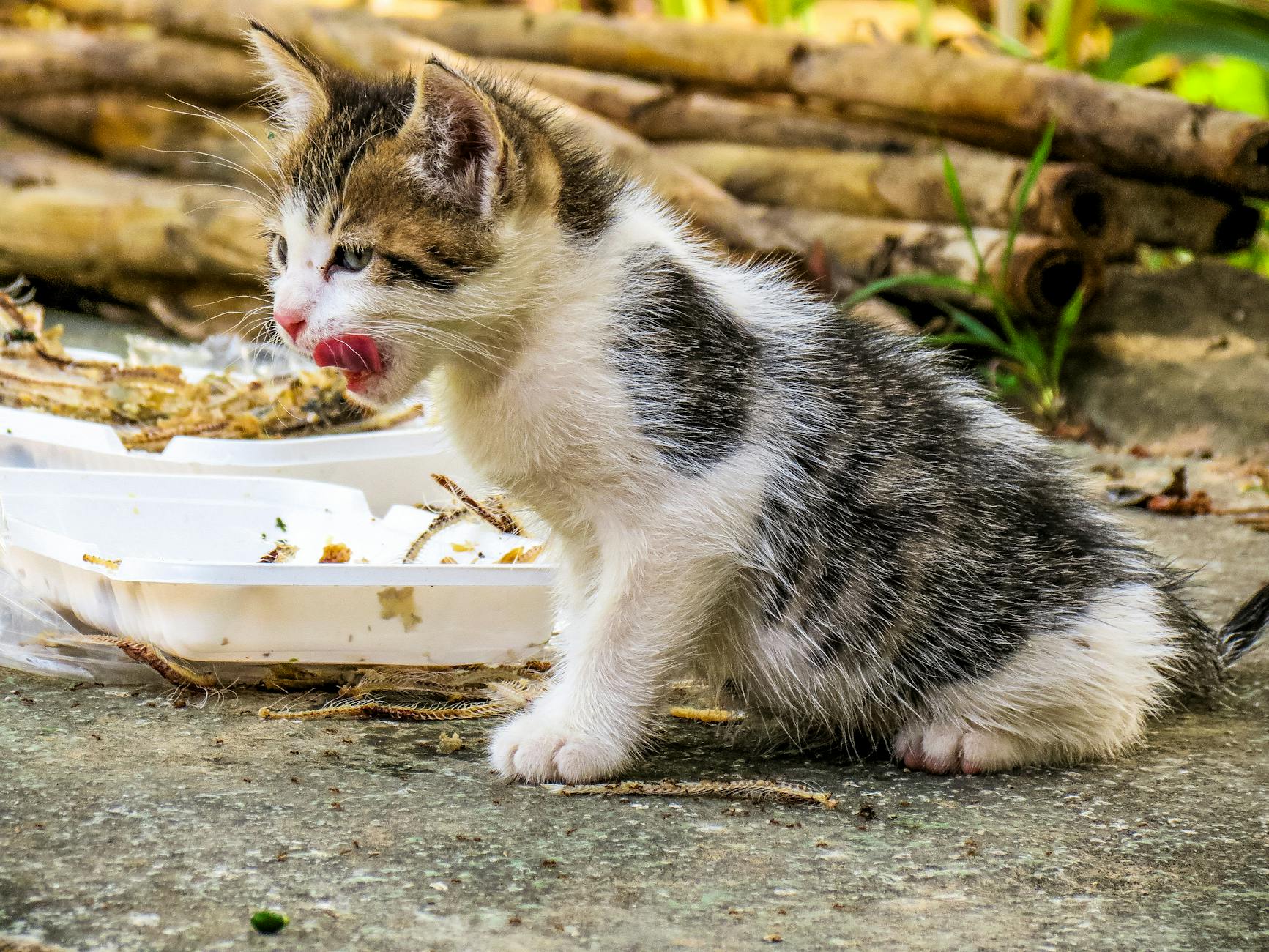
No, it is not safe for cats to eat food that fell in the trash. Trash contains harmful bacteria, spoiled ingredients, mold, and potentially toxic substances that can cause serious gastrointestinal illness or poisoning in cats. Even if the food appears fresh or edible to the human eye, trash exposes food to pathogens like Salmonella and E. coli that multiply rapidly on discarded items.
For example, a cat who eats week-old chicken bones from a trash bin risks both bacterial infection and intestinal blockage from sharp fragments that can perforate the digestive tract. The longer food sits in the trash, the more dangerous it becomes. Decomposing foods produce toxins, mold releases harmful mycotoxins, and various bacteria proliferate to levels far beyond what a cat’s immune system can safely handle. Your cat’s natural curiosity about trash is actually an instinctive scavenging behavior, but modern household trash contains far more hazards than wild food sources ever would.
Table of Contents
- What Makes Trash Food Dangerous for Cats?
- Hidden Toxins and Physical Hazards in Household Trash
- Recognizing Trash-Related Illness in Your Cat
- Prevention Strategies vs. Emergency Intervention
- Special Considerations for Cats with Dietary Sensitivities
- Monitoring High-Risk Cats and Behavioral Approaches
- Long-Term Safety and Lifestyle Adjustments
- Conclusion
- Frequently Asked Questions
What Makes Trash Food Dangerous for Cats?
Spoiled food develops harmful bacteria that are invisible to the naked eye but can cause severe illness within hours of ingestion. Salmonella, Listeria, Botulism-causing organisms, and Staphylococcus aureus all thrive in warm, moist trash environments. When a cat eats contaminated food, these pathogens can cause vomiting, diarrhea, fever, and lethargy within 24 to 48 hours. Some bacterial infections can progress to sepsis, a life-threatening condition where the infection spreads into the bloodstream.
Beyond bacteria, moldy food poses another critical risk. Mold produces aflatoxins and tremorgenic mycotoxins that are toxic even in small quantities. A cat who nibbles on moldy bread or aging fruit risks neurological symptoms, including tremors, seizures, and loss of coordination. The danger is compounded because moldy food often smells attractive to cats—the fermentation process creates odors they instinctively recognize as food.
Hidden Toxins and Physical Hazards in Household Trash
Household trash contains items beyond spoiled food that can poison or injure a cat. Chocolate wrappers, onion peels, and garlic remnants are common trash items that are toxic to felines. Even small amounts of these substances can cause damage to red blood cells and digestive upset. Additionally, trash often includes non-food items like plastic bags, rubber bands, and aluminum foil—all of which can cause intestinal blockages requiring emergency surgery costing thousands of dollars and potentially life-threatening complications.
Bones and sharp objects in trash present a significant mechanical hazard. Chicken bones, fish bones, and sharp edges from canned goods can puncture or perforate the digestive tract. A perforation can lead to peritonitis, an infection in the abdominal cavity that is extremely dangerous and may be fatal without immediate surgical intervention. cats have relatively narrow digestive tracts compared to dogs, making them more vulnerable to blockages from seemingly small pieces of trash.
Recognizing Trash-Related Illness in Your Cat
after eating trash, your cat may show symptoms ranging from mild to severe. Vomiting and diarrhea are the most common early signs, sometimes appearing within hours. Your cat might also show loss of appetite, abdominal pain (indicated by a hunched posture or reluctance to move), lethargy, and fever. Some cats become extremely thirsty as their bodies attempt to flush out toxins.
If your cat eats something from the trash and then stops eating normally or shows any of these signs, contact your veterinarian immediately rather than waiting to see if symptoms resolve on their own. In severe cases, a cat may require hospitalization, intravenous fluids, antibiotics, and supportive care. If the trash consumption caused a blockage, surgery may be necessary. A real-world example is a cat who ate spoiled meat from a trash can and developed severe colitis—inflammation of the colon—requiring two weeks of antibiotics, special diet, and repeated veterinary visits to fully recover. The cat’s owner spent over $1,500 on treatment for an illness that was entirely preventable by keeping the trash secured.
Prevention Strategies vs. Emergency Intervention
The most effective approach is prevention through secure trash management. Use trash cans with locking lids or keep trash in a closed cabinet that your cat cannot access. Store food scraps separately in a secure container rather than in an open trash can. This strategy eliminates the problem entirely and costs virtually nothing beyond a basic trash container with a lid.
Compare this to the cost and stress of emergency veterinary care—a single visit for acute gastroenteritis can cost $300 to $500, while surgery for an intestinal blockage can exceed $3,000. An alternative strategy for some households is placing trash in a room your cat cannot enter, such as a garage, laundry room, or locked bathroom. However, this requires consistency and works only if everyone in the household remembers to keep the door closed. Many cat owners find a locking trash container more reliable because it doesn’t depend on behavioral changes from multiple family members. Training a cat to avoid trash is possible but less reliable than eliminating access entirely, since curiosity and the appeal of food odors often override training.
Special Considerations for Cats with Dietary Sensitivities
Cats with inflammatory bowel disease, pancreatitis, or food allergies are at much higher risk for serious complications after eating trash. Even a small amount of spoiled or contaminated food can trigger weeks of digestive problems in these cats. If your cat has a pre-existing gastrointestinal condition, preventing trash access becomes even more critical. A cat with IBD who eats spoiled food might experience severe flare-ups with vomiting and diarrhea lasting 7 to 10 days, requiring additional medication and potentially hospitalization.
Kittens and senior cats also face heightened risk. Kittens have immature immune systems that cannot fight off infections as effectively as adult cats. Senior cats often have compromised kidney function or other health conditions that make them more vulnerable to the systemic effects of bacterial toxins. A senior cat with kidney disease who ingests contaminated food risks acute kidney injury, which can be fatal or result in permanent loss of kidney function. This is a critical limitation of relying on treatment rather than prevention in older cats.

Monitoring High-Risk Cats and Behavioral Approaches
Some cats are naturally drawn to trash more than others. Highly food-motivated cats or those with pica tendencies (an abnormal urge to eat non-food items) require extra vigilance. Keep trash secured, monitor your cat’s access to the kitchen, and redirect this behavior by providing appropriate outlets like food puzzle toys and more frequent feeding opportunities. Some cats respond to commercial taste deterrent sprays applied to trash can lids, though effectiveness varies.
If your cat has already eaten trash and you witnessed it, call your veterinarian immediately. Provide information about what your cat ate, when it was consumed, and your cat’s current symptoms. The veterinarian may recommend monitoring at home, a brief examination, or bring-in for observation depending on what was ingested. Never assume your cat will be fine just because she seems normal immediately after eating trash—some toxins and bacterial infections develop slowly over 12 to 24 hours.
Long-Term Safety and Lifestyle Adjustments
Creating a trash-safe household requires thinking beyond just the primary trash can. Ensure bathroom trash cans are also secured, as these often contain hazardous items like medications, floss, and personal care products. Kitchen counters and tables should not be used as temporary trash staging areas.
Some cat owners find it helpful to establish a household rule: trash goes directly into a secured container, never sits out temporarily or in an open bin while a family member finishes other tasks. The investment in prevention now—whether through a locking trash can costing $30 to $50, behavioral training, or environmental management—pays enormous dividends in avoided illness, emergency veterinary visits, and stress. Your cat’s natural curiosity about trash will never fully disappear, so your role as a responsible owner is to ensure that curiosity never leads to poisoning or injury.
Conclusion
Trash is one of the most common and preventable sources of feline poisoning and gastrointestinal illness. The bacteria, mold, toxins, and physical hazards present in discarded food far outweigh any nutritional benefit a cat might obtain, and the consequences of trash consumption range from mild gastroenteritis to life-threatening blockages and systemic infections. The direct answer to whether it’s safe is an unambiguous no—there is no safe amount of trash for a cat to consume.
Your best course of action is to eliminate your cat’s access to trash entirely through secure containers and environmental management. This single preventive measure will protect your cat from one of the most common preventable causes of emergency veterinary care. If your cat does consume trash despite your precautions, monitor closely for signs of illness and contact your veterinarian promptly if any symptoms develop.
Frequently Asked Questions
How quickly will my cat get sick after eating trash?
Symptoms can appear within a few hours but may also take 12 to 24 hours to develop. Bacterial infections and toxin exposure don’t always produce immediate symptoms, so even if your cat seems fine initially, illness may still occur. Contact your vet if your cat eats trash, rather than waiting to see if symptoms appear.
Can I give my cat a bland diet after she eats trash to help her stomach?
Do not self-treat at home without veterinary guidance. Your cat may need blood work, examination, or even hospitalization depending on what was ingested. A bland diet might mask symptoms of a serious condition like a blockage that requires surgical intervention. Let your veterinarian determine whether a bland diet is appropriate after examining your cat.
Is food from my trash can somehow safer if I know what I threw away?
No. Even food you prepared at home becomes dangerous once it sits in the trash. Bacteria multiply rapidly, foods decompose, and mold develops quickly. A piece of chicken you cooked that sat in warm trash for several hours is not safe for your cat, even if you prepared it fresh.
What if my cat is an outdoor cat—isn’t scavenging natural?
Yes, scavenging is a natural behavior, but modern indoor environments with processed foods, chemical preservatives, and toxic household items make trash far more dangerous than natural food sources. Even outdoor cats benefit from prevention when possible, and indoor cats should never have access to household trash.
My cat ate a small amount of something from the trash. Should I go to the emergency vet?
Call your regular veterinarian first and describe what your cat ate. They can advise whether emergency care is needed. Bring-in for examination is usually recommended if your cat ate something toxic or potentially blocking, or if she shows any symptoms within the next 24 hours. When in doubt, a quick phone call to your vet is always the right choice.