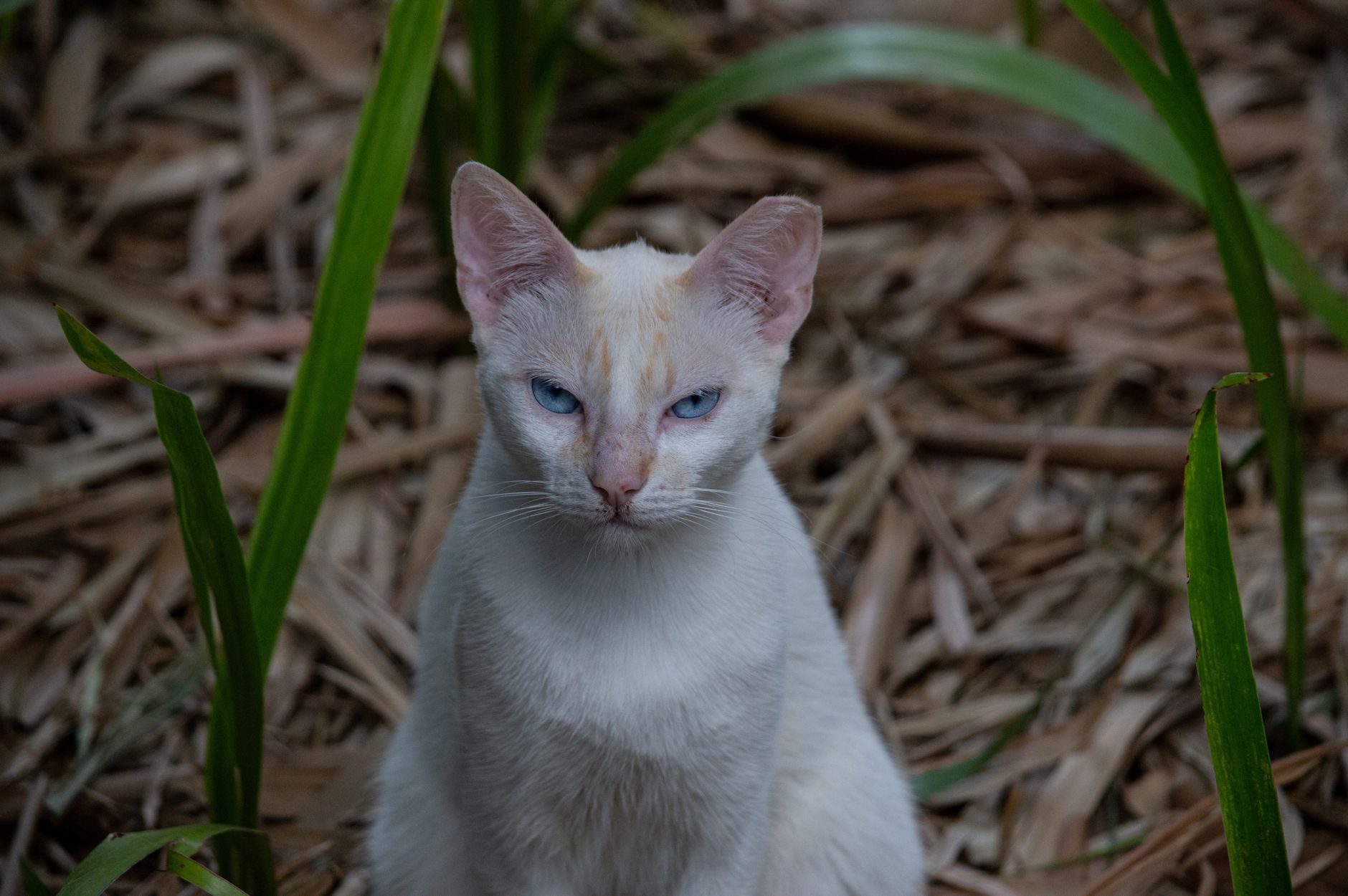
An albino cat is a feline with complete absence of pigmentation in its skin, fur, and eyes due to a genetic mutation that prevents the production of melanin. This rare condition results in a pure white coat and pinkish or reddish eyes caused by blood vessels showing through the unpigmented iris. Albino cats represent only a small fraction of the feline population and should not be confused with white cats, which retain normal pigmentation in their eyes and may carry different genes.
The difference between an albino cat and a white cat matters significantly for health and genetics. A white cat with blue eyes or yellow eyes has functional pigmentation genes but white coloring from dominant genes that suppress color; an albino cat has non-functional pigment genes entirely. For example, a white cat with blue eyes descended from two white parents may or may not be deaf, while an albino cat’s pink eyes are a definitive sign of the genetic condition.
Table of Contents
- How Does the Albino Gene Occur in Cats?
- Physical Characteristics and Visible Traits
- Vision and Sensory Considerations
- Health Management and Daily Care Requirements
- Hearing and Other Neurological Considerations
- Genetic Testing and Breeding Implications
- Distinguishing Albino Cats from White Cats and Other Color Variations
How Does the Albino Gene Occur in Cats?
The albino condition in cats results from recessive mutations in genes responsible for melanin synthesis, most commonly the TYR gene that encodes the tyrosinase enzyme. When a cat inherits two copies of this mutated gene—one from each parent—it cannot produce melanin anywhere in its body. This is why albinism is relatively rare in domestic cats; both parents must carry the recessive gene for a kitten to express the trait, and breeders typically select against it.
The inheritance pattern is straightforward Mendelian genetics. Two carrier cats (heterozygous) have a 25 percent chance of producing an albino kitten with each litter. A cat bred from an albino parent and a non-carrier will never produce albino kittens but will produce carrier offspring in every case. Some cat populations show higher frequencies of albino carriers than others, particularly in limited-gene-pool breeding situations or isolated communities.
Physical Characteristics and Visible Traits
Albino cats display several consistent physical markers beyond their white fur. Their eyes lack pigment in the iris, making them appear pink or red due to visible blood vessels; this is not a medical condition but rather the expected appearance when no pigment masks the underlying tissue. The nose leather and paw pads are also unpigmented and may appear pale pink or white instead of the typical dark colors seen in pigmented cats.
The white coat in albino cats is pure and complete, extending to every hair, which distinguishes it visually from white cats that may have slight cream coloring or patches of pigment. A significant limitation of this complete lack of pigmentation is that albino cats have no natural sun protection; their skin is extremely vulnerable to ultraviolet radiation. Even moderate sun exposure can cause painful sunburn and increase the risk of skin cancer, particularly squamous cell carcinoma on the ears, nose, and other exposed areas. Indoor-only housing is essential for albino cats, and any outdoor time requires protective measures.
Vision and Sensory Considerations
Albino cats frequently experience vision problems related to the absent pigmentation in the eye. The unpigmented retina may develop abnormal neural connections, and many albino cats have reduced visual acuity or nystagmus (involuntary eye movement), which affects their ability to track moving objects precisely. Some albino cats navigate their environment reasonably well despite these limitations, while others have more significant vision impairment that requires environmental modifications like keeping furniture in consistent locations and minimizing sudden changes.
Photophobia is common in albino cats due to the lack of pigmentation to filter light in the eye. Bright lights cause discomfort, and these cats often prefer dim environments and may squint frequently or show signs of eye irritation in normal household lighting. This differs from a typical cat’s slight light sensitivity; an albino cat’s discomfort is more pronounced. Owners often observe these cats seeking out darker rooms and resting with their eyes partially closed, which is a normal response to their condition rather than a sign of illness.
Health Management and Daily Care Requirements
Caring for an albino cat requires specific attention to environmental factors and protection from sun exposure. These cats must be kept strictly indoors unless in controlled outdoor situations with shade, UV-protective barriers, or specially designed feline sunscreen formulated for cats. Unlike white cats with normal pigmentation that may tolerate brief outdoor time, albino cats’ complete lack of melanin means even 15 to 20 minutes of direct midday sun can begin causing skin damage.
The comparison between an albino cat and a typically pigmented cat’s care needs is substantial. A normal cat can go outside on a sunny day for hours without concern; an albino cat requires the same protective measures as a person with severe sun sensitivity. Indoor housing with appropriate lighting and regular veterinary monitoring helps prevent skin complications. Some owners use window film that filters UV rays to allow their albino cats to safely rest near windows while reducing sun exposure risk.
Hearing and Other Neurological Considerations
While albinism itself does not directly cause deafness in cats as it does in some white cats, the genetic pathways involved in pigmentation and neurological development can create correlations. Some albino cats show reduced hearing, though this is not universal. Each albino cat should be considered individually; some have normal hearing while others have partial or complete hearing loss. This unpredictability means that behavioral testing and veterinary evaluation are important to understand each cat’s specific sensory capabilities.
Albino cats with vision and hearing limitations require modified environmental design and training approaches. A cat with reduced vision needs landmarks, consistent furniture placement, and careful introduction to new spaces. A cat with hearing loss relies more heavily on other senses and may be startled by unexpected physical contact. The combination of both impairments in a single cat creates significant challenges; owners must be aware that their cat cannot see an approaching person or hear a warning sound, increasing the risk of accidental injury or stress.
Genetic Testing and Breeding Implications
Genetic testing can identify whether a cat carries albino mutations before breeding, allowing responsible breeders to make informed decisions. A carrier cat (heterozygous) shows no visible signs of albinism but can pass the gene to offspring. Testing is straightforward through veterinary genetics labs and provides certainty about a cat’s status.
For example, a breeder considering whether to breed a white cat may discover through testing that it carries an albino mutation, which then informs breeding selection. Ethical breeding practices avoid deliberately producing albino cats due to the significant health and quality-of-life challenges these cats face. The genetic mutation that creates albinism cannot currently be corrected through breeding or medical intervention, meaning that an albino cat born today will have the same sensory and sun-protection limitations throughout its life.
Distinguishing Albino Cats from White Cats and Other Color Variations
The most reliable way to identify an albino cat is the eye color combined with complete white fur. A true albino has pink or red eyes; any cat with blue, yellow, green, or other pigmented eye color is not albino by definition. White cats with blue eyes may be mistaken for albino cats, but the presence of eye pigment rules out albinism. Some cats with very light coloring or dilute genes may appear nearly white but retain subtle pigmentation visible under certain lighting conditions.
Partial albinism (oculocutaneous albinism in some forms) does exist but is extremely rare in domestic cats. These cats may show reduced rather than complete pigmentation and may have eyes with some color present but paler than normal. The standard albino cat, however, displays total melanin absence throughout the body. Veterinary confirmation through physical examination and, if needed, genetic testing provides definitive identification for cats whose status is uncertain.
- —