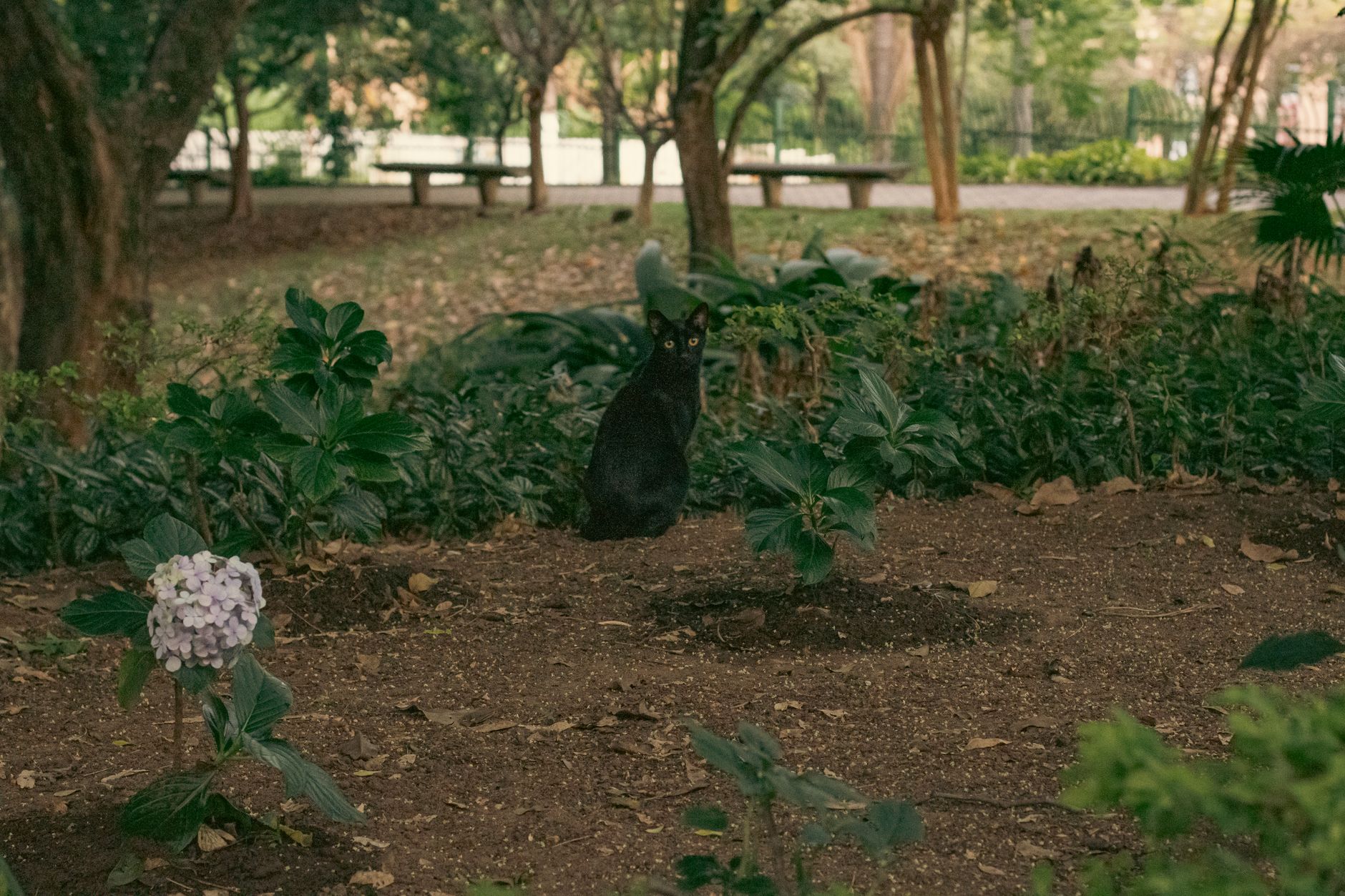
A melanistic cat is a feline with a genetic condition that produces excessive dark pigmentation in its fur, resulting in a coat that appears nearly or entirely black, often with faint tabby or other patterns visible only in strong sunlight. Unlike solid black cats, which have a normal amount of melanin distributed evenly across their coat, melanistic cats produce such an abundance of dark pigment that their base coat color—whether it would naturally be brown, gray, or tabby—becomes obscured under layers of extra pigmentation. A Bengal cat, for example, might display dramatic dark rosettes or marble patterns under normal light, but a melanistic Bengal can appear completely black except for the faint ghost markings that emerge when the cat sits in direct sunlight.
Melanism in cats is a fascinating example of how pigmentation genes can override a cat’s expected appearance. The trait is not exclusive to any single breed or type of cat; it can occur in domestic shorthairs, longhairs, and purebreds alike. While melanistic cats are not albino or leucistic, and they’re not simply “really dark tabby cats,” they do represent a spectrum of hyperpigmentation that ranges from subtle darkening to near-total color suppression of an animal’s natural pattern.
Table of Contents
- How Is Melanism Different from Other Black Coloring?
- Genetic Basis and How Melanism Works in Cats
- Which Breeds Can Be Melanistic?
- Health Considerations for Melanistic Cats
- Care and Management Specific to Melanistic Cats
- Distinguishing Melanistic Cats from Melanic Cats
- Photographing and Identifying Melanistic Cats in Sunlight
- Frequently Asked Questions
How Is Melanism Different from Other Black Coloring?
The key distinction between a melanistic cat and a standard solid black cat lies in the root cause of the dark appearance. A solid black cat carries genes for the black color as its intended, natural coat pattern—melanin is produced normally, distributed normally, and results in an expected black coat. A melanistic cat, by contrast, is experiencing a genetic condition where melanin production is abnormally elevated, overriding whatever pattern genes the cat would typically express. The difference is subtle but real: a solid black cat’s blackness is intentional in its genetics, while a melanistic cat’s blackness is the result of a genetic amplification that masks its underlying pattern.
Melanism can be contrasted with other color modifications like dilution (which lightens coat color) or non-agouti variants. If a cat carries the tabby gene but also expresses melanism, the tabby stripes will still exist genetically, but they’ll be visible only under certain light conditions—appearing as faint whorls or stripes when the cat is in sunlight. A solid black cat under the same conditions will simply remain uniformly black because its coat pattern is not being masked; it is the coat pattern. This is why melanistic tigers in the wild are sometimes called “black tigers,” while a standard tiger’s stripes are always visible regardless of light; the melanism obscures them.
Genetic Basis and How Melanism Works in Cats
Melanism in cats is primarily controlled by polygenic inheritance, meaning multiple genes contribute to the degree of dark pigmentation the cat will express. The condition is distinct from simple dominant or recessive single-gene traits; instead, it involves an accumulation of alleles that increase melanin synthesis. Some melanistic cats may carry modifier genes that enhance the expression of existing color patterns, while others may have mutations in genes responsible for regulating melanin production itself. The exact genetic mechanism in domestic cats is not fully mapped the way it is in wild felids, making it difficult to predict with certainty whether two cats will produce melanistic offspring.
One important limitation to understand is that melanism is not a reliable or easily bred-for trait in domestic cats the way solid black or orange coloring can be. Breeders cannot simply select two melanistic cats and guarantee all offspring will be melanistic, because the genetic basis varies between individuals. A melanistic cat may be expressing the trait due to a combination of modifier genes, environmental factors during development, or even age-related pigmentation changes, none of which guarantees heritability. Additionally, melanism appears to be influenced by temperature during development—some evidence suggests that cooler ambient temperatures during a kitten’s growth phase can enhance melanin production, though this has not been extensively studied in domestic cats.
Which Breeds Can Be Melanistic?
Melanistic individuals have been documented in nearly every cat breed and domestic cat population, though they are more commonly discussed in wild felids like jaguars and leopards than in domestic cats. Bengal cats, which already carry spotted or marbled patterns, are among the most frequently recognized melanistic domestic breeds because their underlying rosette or marble pattern becomes visible under direct sunlight, creating a striking ghost-pattern effect. Savannah cats, another breed known for bold markings, can also express melanism, though the trait is uncommon.
The Turkish Van, Maine Coon, and Norwegian Forest Cat have all produced melanistic individuals, though these cases are rarely highlighted as a breed standard or special trait. In domestic shorthair and longhair cats, melanism is likely far more common than recognized because many people simply assume a very dark brown or black cat is “just a dark cat” rather than questioning whether the darkness is genetically driven. One practical consideration is that melanistic breeds or bloodlines are not recognized by major cat registries like TICA or CFA as a distinct class, meaning a melanistic cat would typically be registered under its normal breed color designation, if registered at all. This lack of formal recognition reflects the unpredictable nature of the trait and the difficulty in establishing breeding lines for it.
Health Considerations for Melanistic Cats
Melanism itself does not cause direct health problems in cats. The excess melanin production that creates the dark coat is not toxic or inherently harmful; melanistic cats can live normal, healthy lifespans provided they receive proper care. However, the genetic factors underlying melanism might occasionally coincide with other traits or conditions, which is why careful observation is important. Some melanistic cats, particularly those from lines where melanism is common, should be monitored for any signs of hearing loss, as some genetic factors that affect pigmentation can also influence inner ear development in other species—though this link is not well-established in domestic cats.
A practical limitation is that melanistic cats, particularly those with very dark coats, can be more prone to heat absorption in direct sunlight. A black cat sitting on a sunny windowsill absorbs more solar radiation than a lighter-colored cat would, which means melanistic cats may feel uncomfortably warm in hot climates more quickly. This is not a disease, but it is a real physical consideration: a melanistic cat in a hot, sunny environment should always have access to cool, shaded areas and plenty of fresh water. Additionally, some veterinarians report that examining dark-coated cats can be slightly more challenging during routine checkups, as spotting small wounds, parasites, or skin conditions on dark fur requires more careful inspection.
Care and Management Specific to Melanistic Cats
Caring for a melanistic cat is not fundamentally different from caring for any other cat, but a few practical adjustments can enhance the cat’s comfort and well-being. Grooming is particularly important for melanistic longhaired cats, as mats and tangles are harder to spot in very dark fur, meaning problems can persist longer before being noticed. Regular brushing sessions, ideally several times a week, help keep the coat healthy and prevent matting. Additionally, providing cool resting spots and ensuring the cat has shaded areas in warm weather prevents overheating, which is a real concern for any dark-colored animal.
Another practical consideration involves nutrition and coat health. While melanin production does not require special dietary support beyond standard, high-quality cat food, some owners report that cats with particularly vivid or intense coat colors benefit from diets rich in omega-3 and omega-6 fatty acids, which support skin and coat health. This is not specific to melanistic cats, but it is worth noting because healthy skin supports healthy pigmentation. One tradeoff is that very dark-coated cats may be more difficult to photograph clearly, requiring flash or additional lighting to bring out detail, which is why many melanistic cat owners rely on natural sunlight photography to showcase their cat’s ghost patterns and underlying markings.
Distinguishing Melanistic Cats from Melanic Cats
The terms “melanistic” and “melanic” are sometimes used interchangeably, but there is a meaningful distinction in scientific usage. Melanistic typically refers to an individual organism with abnormally high melanin production due to a genetic condition, while melanic refers to a population-level trend or an individual from a population where dark coloration has become prevalent through natural selection or adaptation. A melanistic cat is one animal expressing excess pigmentation; a melanic population would be an entire group of cats, wild or domestic, where dark coloring predominates because it offers a survival advantage in that environment.
In practice, when discussing domestic cats, the term melanistic is more accurate for individual dark cats that appear to be darker than expected for their breed or genetic background. If someone says a Bengal cat looks “melanistic,” they mean that particular cat is expressing darker pigmentation than standard. The distinction matters mainly for scientific precision, but for cat owners and enthusiasts, understanding that both terms relate to excessive dark pigmentation is sufficient. A melanistic tabby cat remains a tabby genetically; the melanism is an overlay.
Photographing and Identifying Melanistic Cats in Sunlight
One of the clearest ways to identify a melanistic cat is to observe it in direct, strong sunlight. When a melanistic Bengal, Savannah, or even a domestic shorthair sits in bright natural light, the ghost pattern—faint outlines of spots, rosettes, or stripes—becomes visible beneath the dark coat. This phenomenon occurs because melanin levels vary slightly across the cat’s body, and direct sunlight illuminates these variations in a way that indoor or ambient lighting does not. A melanistic brown tabby might appear almost solid black indoors but reveal clear tabby stripes when photographed in noon sunlight.
This property has become popular among cat photographers and enthusiasts who specifically seek to capture melanistic cats’ hidden patterns. The visibility of ghost patterns is not a sign of disease or fading color; it is a natural optical effect related to how light interacts with melanin at different densities. Some melanistic cats show very subtle ghost patterns that are barely perceptible even in bright light, while others display dramatic, clearly defined patterns. This variation depends on the degree of melanin overproduction and the underlying genetics of the individual cat’s coat pattern. An older melanistic cat may show slightly more visible ghost patterns than a younger one, as the coat texture and melanin distribution can shift slightly with age, but these are minor cosmetic changes with no health implications.
Frequently Asked Questions
Is a melanistic cat the same as a black cat?
No. A solid black cat has genes for black coloring as its natural pattern. A melanistic cat is a different color genetically but produces so much melanin that it appears dark or black. The difference is why ghost patterns show in sunlight on melanistic cats but not on naturally black cats.
Are melanistic cats rare?
Melanistic individuals occur in most cat breeds and domestic cat populations, but they are not commonly discussed or highlighted. They are more frequent than recognized because people often don’t distinguish between naturally dark cats and melanistic ones.
Do melanistic cats have health problems?
Melanism itself does not cause health issues. Melanistic cats are generally as healthy as any other cat, though they may be prone to overheating in hot climates due to dark coat absorption of solar radiation.
Can you breed two melanistic cats together and get melanistic kittens?
Not reliably. Melanism is polygenic and unpredictable in inheritance. Two melanistic parents may produce offspring with normal coloring or varied levels of pigmentation. It is not a trait that breeds true like simple dominant or recessive colors.
How can I tell if my cat is melanistic?
Place your cat in direct sunlight and look for ghost patterns—faint markings of the cat’s underlying coat pattern visible beneath the dark fur. If you see these patterns, your cat is likely melanistic.
Do melanistic cats need special grooming?
They need regular brushing like all cats, but mats and skin conditions are harder to spot on very dark fur, so more frequent or careful inspection during grooming is worthwhile.