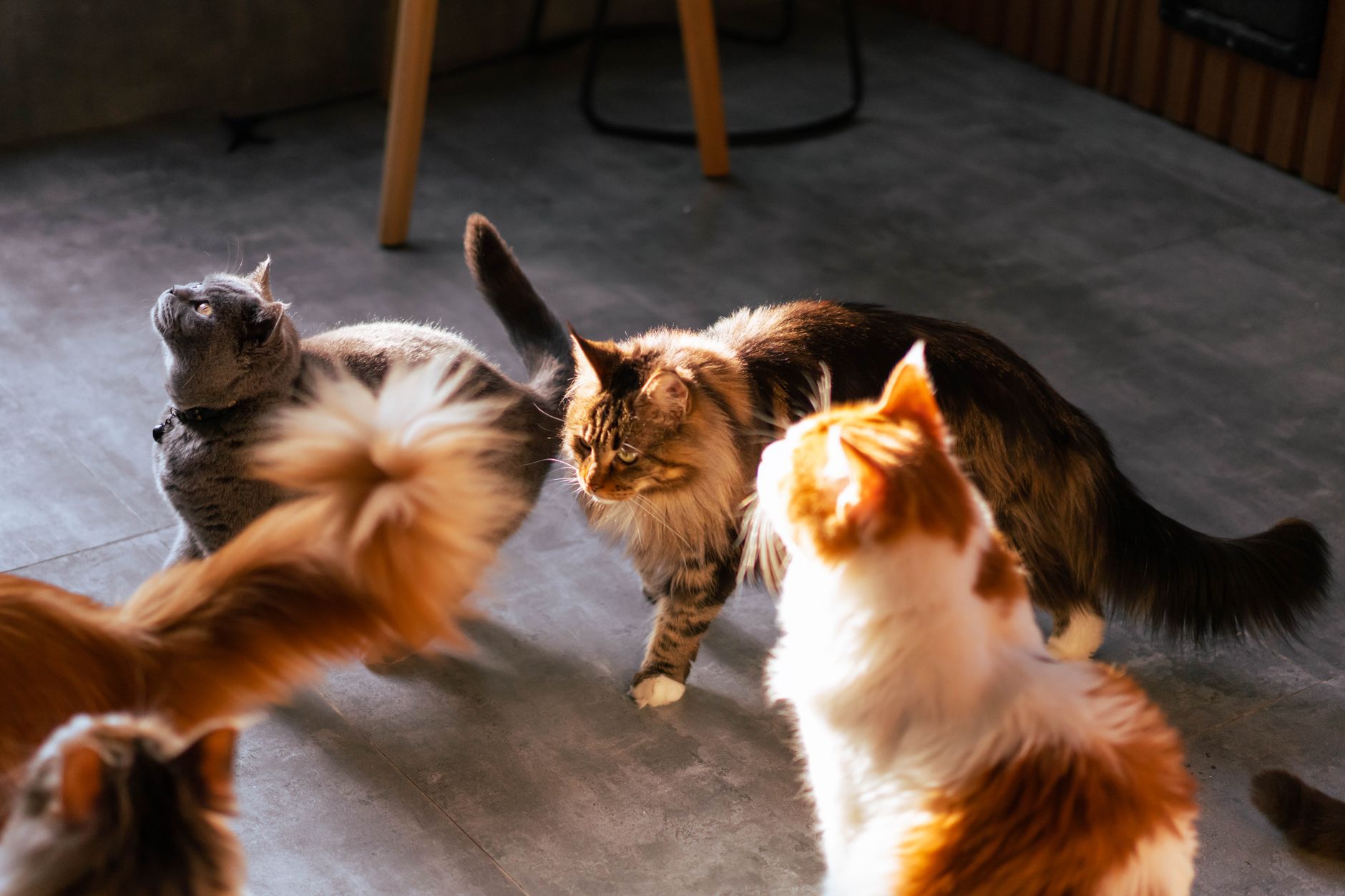
A dilute coat in cats is a paler, softer version of a standard coat color, caused by a recessive gene that reduces the density of pigment in each hair. Instead of the rich, dark tones associated with typical cat colors, dilute coats appear washed out or muted—a black cat becomes gray (called blue in cat breeding), a red cat becomes cream, and a chocolate cat becomes lilac. This genetic variation occurs in domestic cats across all body sizes and coat patterns, from short-haired alley cats to purebred Persians and Siamese.
The dilute gene doesn’t change the pattern of a cat’s coat—only the intensity of the color. A tabby cat with a dilute coat will still show stripes or swirls, but in lighter shades. A colorpoint Siamese with dilute coloring will have the same facial mask and ear patterns as a standard Siamese, just in softer tones. The effect is purely cosmetic in most cases, though the genetic mechanism behind dilution does occasionally correlate with other traits.
Table of Contents
- WHAT CAUSES THE DILUTE COAT GENE IN CATS?
- HOW DILUTE COAT COLORS APPEAR IN PRACTICE
- DILUTE COATS IN RECOGNIZED CAT BREEDS
- HOW TO IDENTIFY A DILUTE COAT CAT
- HEALTH CONCERNS AND MYTHS ABOUT DILUTE CATS
- DILUTE CALICOS AND TORTOISESHELLS
- COLOR MODIFIERS AND GENES THAT INTERACT WITH DILUTE COATS
WHAT CAUSES THE DILUTE COAT GENE IN CATS?
The dilute coat color is controlled by a single gene, often referred to as the dilute locus or the “d” gene in genetic notation. This gene is autosomal recessive, meaning a cat must inherit the dilute allele from both parents to express the dilute phenotype. If a cat inherits the dilute allele from only one parent, it will appear as a standard (non-dilute) color but will carry the gene and can pass it to its offspring. A dilute cat mated with a non-dilute cat carrying the recessive gene has a 50 percent chance of producing dilute kittens; two dilute parents will produce 100 percent dilute kittens.
The dilute gene reduces the size and concentration of pigment granules (eumelanin and phaeomelanin) in the hair cortex. This doesn’t remove color entirely—it simply makes each hair carry less pigment, creating the optical effect of a lighter, grayer tone. Interestingly, the dilute gene appears to be quite common in domestic cat populations worldwide. Studies of shelter cats and feral populations show that dilute cats represent a notable minority but are far from rare, particularly in regions with high genetic diversity among uncontrolled breeding populations.
HOW DILUTE COAT COLORS APPEAR IN PRACTICE
Each standard cat color has a dilute counterpart that is instantly recognizable to experienced cat people. Black becomes blue-gray (often called “blue”), the most common and recognizable dilute color. Red or orange becomes cream, a pale peachy or ivory tone. Chocolate becomes lilac, a pinkish-gray that ranges from silvery to dove-colored depending on the cat’s age and lighting.
Cinnamon becomes fawn, and other rare base colors have corresponding dilute versions. The appearance of a dilute coat can shift subtly with age and lighting. kittens born with dilute coloring are often strikingly pale, sometimes appearing almost white at birth, before the full color develops over the first few weeks. Adult dilute cats’ coats can appear slightly warmer or cooler depending on the sun exposure and indoor lighting; a blue cat photographed in daylight may look noticeably different from one photographed under artificial light. One limitation of dilute coloring is that it can make it harder to see subtle pattern details in a cat’s coat, particularly in dilute tabbies or dilute tortoiseshells, because the reduced pigment density flattens the contrast between pattern and base color.
DILUTE COATS IN RECOGNIZED CAT BREEDS
Dilute coloring is intentionally bred into many cat breeds. Russian Blues, one of the most recognizable breeds, have a trademark blue-gray coat paired with striking green eyes—a combination that has become so associated with the breed that any gray-coated cat with green eyes is often mistaken for a Russian Blue, regardless of actual ancestry. Tonkinese cats come in several dilute colors including blue mink. Burmese cats have sable (dark brown) and champagne (dilute brown) color variants, with the champagne Burmese being highly sought after for showing.
Among pointed breeds like Siamese and Balinese, dilute colorpoints are recognized colors called blue point, cream point, chocolate point, and lilac point. Persians are shown in both standard and dilute color divisions. Some breeds that normally appear in non-dilute colors occasionally produce dilute kittens when two carrier parents are bred together, which can complicate breeding programs for breeders focused on specific colors. The Bengal breed, despite its wildcat ancestry, also carries the dilute gene and some Bengals display dilute coloring, though this trait is less emphasized in show standards.
HOW TO IDENTIFY A DILUTE COAT CAT
Identifying a dilute coat is straightforward once you know what to look for: the coat should appear noticeably paler than the standard version of that color. A dilute black cat will appear distinctly gray-blue rather than jet black, even in good light. A dilute red cat will lack the warm orange-red tones and appear pale cream or buff-colored.
Kittens with dilute coloring can be identified early, sometimes as early as a few days old, though the distinction becomes clearer as they mature. One practical challenge is distinguishing between a very light non-dilute cat and a dilute cat, particularly in dilute red or cream varieties. The genetic test is the only 100 percent certain method, but visually, a dilute cat’s color should be consistently pale across the entire body and should not deepen noticeably with age (whereas some lighter non-dilute cats do develop richer color as they mature). Dilute cats also tend to have a characteristic softness or “faded” quality to their color that experienced observers can recognize, but this requires seeing examples side by side with their non-dilute counterparts.
HEALTH CONCERNS AND MYTHS ABOUT DILUTE CATS
The most persistent myth about dilute cats is that they are prone to hearing loss, behavioral problems, or developmental issues. This myth likely stems from confusion with the widely documented link between white coats (and the white spotting gene) and deafness, particularly in blue-eyed cats. The dilute gene itself has no known association with deafness or behavioral abnormality. A blue-coated cat with yellow eyes has no increased risk of hearing problems.
However, a white cat with blue eyes can be deaf regardless of coat color genetics—the issue is the white pigmentation, not dilution. That said, some legitimate concerns exist in specific circumstances. In certain breeds, dilute coloring can occasionally co-occur with other recessive traits through linkage or simple coincidence of breeding choices. The temperament and health of a dilute cat depends entirely on the individual cat’s genetics, breeding history, and environment, not on the dilute gene itself. The main real consideration is that dilute coats can sometimes show slight flaking or dryness in the skin, and the coat may require slightly more regular grooming to maintain its texture, though this varies tremendously between individual cats and is not universal.
DILUTE CALICOS AND TORTOISESHELLS
Dilute coloring has a striking visual impact when it appears in calico and tortoiseshell cats, which already display multiple colors. A standard calico cat has patches of black, red, and white; a dilute calico has patches of blue, cream, and white, creating a softer, more pastel appearance sometimes called a “calico in pastels.” Dilute tortoiseshells lack the white patches but display the same blue and cream coloring in a mixed pattern. These cats are visually distinctive and often catch the eye precisely because the combination of dilute coloring with the calico or tortoiseshell pattern creates a unusual aesthetic that differs markedly from the standard versions.
Because calico and tortoiseshell coloring is linked to the X chromosome (and is therefore predominantly female), dilute calicos are also predominantly female. Rare male dilute calicos do occur through chromosomal abnormalities and are almost always sterile, making them genetic curiosities in the breeding world. A dilute calico cat’s coloring can be harder to photograph accurately than a standard calico because the reduced pigment contrast makes the color patches less distinct, particularly in dim lighting.
COLOR MODIFIERS AND GENES THAT INTERACT WITH DILUTE COATS
The dilute gene does not work in isolation—it interacts with other color genes that affect the final appearance of a cat’s coat. The agouti gene, which creates tabby patterns, interacts with dilute so that a dilute tabby shows faint stripes in muted tones. The brown gene (which produces chocolate and cinnamon colors) interacts with dilute to produce lilac and fawn.
Temperature-sensitive genes, which are responsible for colorpoint patterns in Siamese cats, show their effects most dramatically when combined with dilute coloring, creating the striking contrast between the pale body and darker points that characterize a dilac point or cream point Siamese. The silver gene, which creates a metallic sparkle in some tabby cats, can combine with dilute coloring to produce a particularly striking appearance in breeds like the Tonkinese. Some rare genetic combinations create unexpected colors; a cat inheriting both the dilute gene and the chocolate gene will be lilac rather than brown, and if that same cat also carries a colorpoint gene, it will display as a lilac point rather than a chocolate point. These interactions are why breeders track genetic lineages carefully: predicting exact coat colors in the next generation requires understanding not just which genes are present but how they will combine and express together.
- —