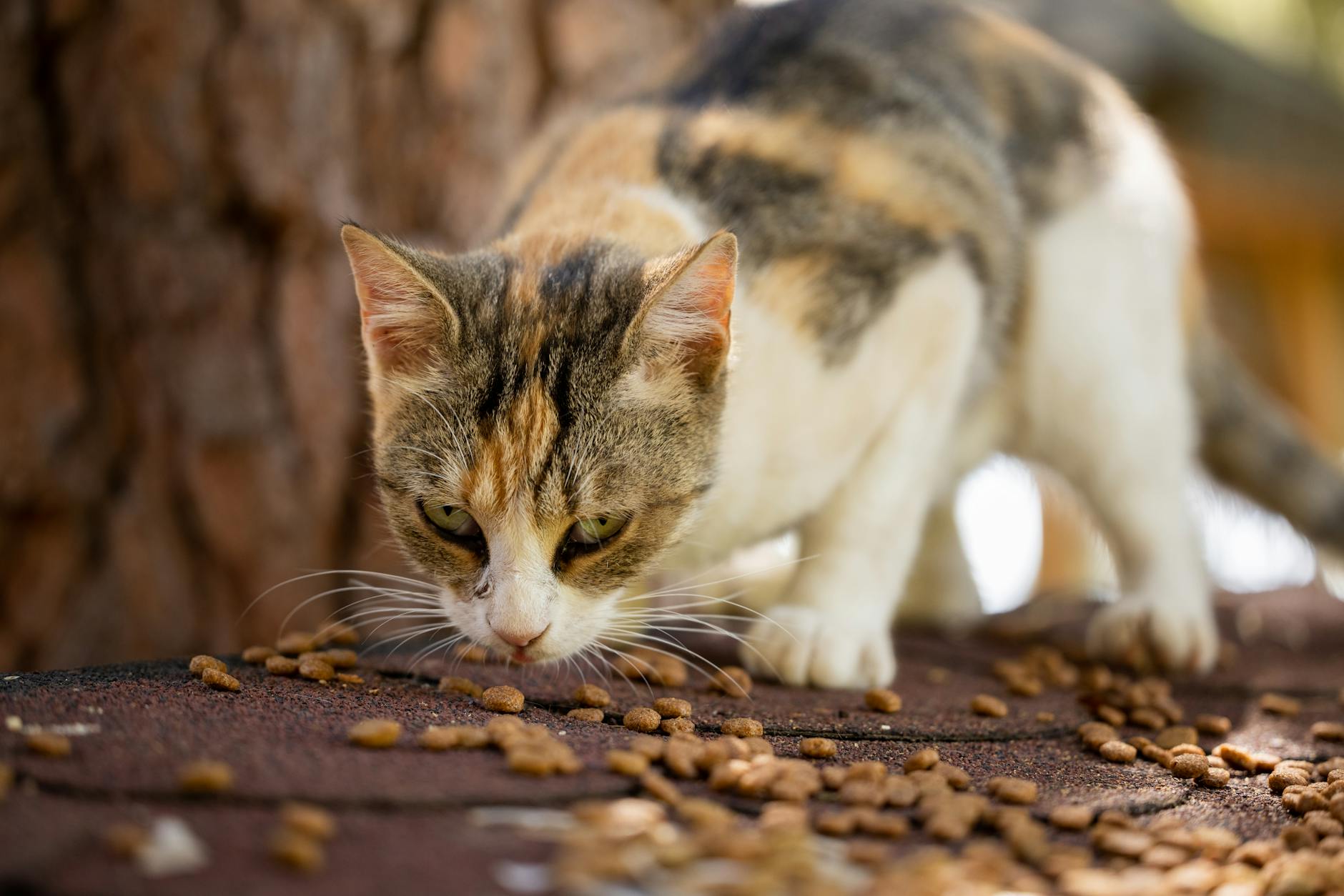
It is not safe for cats to eat food off the counter. While a single bite of cooked chicken or a taste of scrambled eggs may not cause immediate harm, countertop dining exposes cats to serious risks including toxic foods, bacterial contamination, and digestive upset. For example, if your cat jumps up and eats a piece of chocolate cake or nibbles on food that was seasoned with garlic, the results can range from an uncomfortable stomach to a medical emergency requiring veterinary intervention.
The danger isn’t limited to specific foods. Counters are also where people prepare meals, store fresh produce, and leave out ingredients that seem harmless but can be toxic to cats. Raw dough containing yeast, avocados, onions, grapes, and raisins all pose legitimate health threats. Beyond toxicity, countertop access trains cats to view human food as fair game, establishing a behavior that becomes increasingly difficult to manage and puts them at greater risk over time.
Table of Contents
- What Makes Counter Food Dangerous for Cats?
- Toxic Foods and Hidden Hazards
- Behavioral Consequences of Counter Access
- Preventing Cats from Counter Surfing
- Recognizing Signs of Food Poisoning or Toxicity
- Special Considerations for Kittens and Senior Cats
- Building a Cat-Safe Kitchen Culture
- Conclusion
- Frequently Asked Questions
What Makes Counter Food Dangerous for Cats?
cats lack certain enzymes and metabolic pathways that humans have, making them vulnerable to substances we process without difficulty. Chocolate, for instance, contains theobromine, which cats cannot metabolize effectively. Similarly, the compound in garlic and onions called thiosulfate can damage a cat’s red blood cells, leading to hemolytic anemia. A cat that eats a small amount may show no immediate signs, but repeated exposure or larger quantities can cause serious illness.
Bacterial contamination presents another hidden danger. Raw or undercooked meat on a counter can harbor salmonella or E. coli, pathogens that don’t necessarily cause problems for humans with intact immune systems but can trigger severe gastrointestinal disease in cats. Mold that grows on forgotten leftovers can produce tremorgenic mycotoxins that cause neurological symptoms ranging from mild tremors to seizures. A cat who sneaks a bite of moldy bread from the kitchen counter may not show symptoms for hours, making it difficult to connect the incident to the illness that follows.

Toxic Foods and Hidden Hazards
The list of foods toxic to cats extends far beyond obvious culprits. Xylitol, an artificial sweetener found in sugar-free products, candies, and some baked goods, causes a rapid insulin release in cats that can lead to severe hypoglycemia and liver damage. Alcohol, even in small amounts, depresses the central nervous system and can cause metabolic acidosis. Caffeine, found in coffee and tea, affects cats’ hearts and nervous systems.
A cat that jumps on the counter while you’re making a morning smoothie and laps up a few tablespoons of milk containing chocolate powder or a sweetened drink is at genuine risk. Macadamia nuts contain an unknown toxin that causes weakness, tremors, and hyperthermia in cats. Lilies, which people often keep in vases on counters or tables, are extremely toxic to cats and can cause acute kidney failure from even small ingestions. The limitation here is that many toxic substances are common in homes, and not every cat owner is aware of the full scope of risks. A person might feel their cat is fine after eating something once, then expose them to the same food again without realizing the accumulated risk.
Behavioral Consequences of Counter Access
Allowing a cat to eat off the counter establishes a powerful association: counters equal food. Cats are intelligent and motivated by immediate rewards, so a successful counter raid becomes a learned behavior that repeats. Unlike dogs, cats cannot be given a simple “off” command and reliably comply, especially when food is the motivator. Once a cat learns that climbing creates access to high-value items, managing that behavior becomes exponentially harder.
This behavioral problem has practical consequences beyond nutrition. A cat with unrestricted counter access will investigate cutting boards mid-meal preparation, walk through food being prepared, and place their paws on surfaces where you’re about to place dishes or utensils. They may knock items off shelves, break dishes, or disrupt your cooking. The most troubling aspect is that each successful counter visit reinforces the behavior, making prevention easier than correction once the habit is established.
Preventing Cats from Counter Surfing
The most effective strategy is environmental management: making counters unappealing and inaccessible. Remove temptation by not leaving food unattended on counters, clearing dishes immediately after meals, and storing food in closed containers. Use physical barriers where possible—closing doors to the kitchen during cooking or using baby gates can limit counter access. Some people cover counters with aluminum foil or double-sided tape, as many cats dislike the texture, though this is temporary and requires reapplication. Positive reinforcement of desired behavior works better than punishment.
When your cat sits on the floor near the kitchen, offer treats and attention. When they remain on the ground while you prepare food, reward that choice. This approach creates an association between the floor and positive outcomes, contrasting with the lack of reward for counter behavior. The trade-off is that this method requires consistent application and patience—it works, but not overnight. Spray deterrents can also help, though their effectiveness varies by individual cat.
Recognizing Signs of Food Poisoning or Toxicity
Understanding the warning signs of food-related illness helps you respond quickly if your cat does consume something dangerous. Vomiting, diarrhea, lethargy, loss of appetite, excessive drooling, tremors, or difficulty breathing are all red flags. Some toxins show delayed symptoms; for instance, lily toxicity may not produce obvious signs until kidney damage is already underway. A cat that eats something from the counter and later seems slightly less energetic or shows any deviation from their normal behavior warrants a call to a veterinarian.
The limitation is that many illnesses appear similar at first presentation, so your veterinarian may need to perform tests or take a thorough history to determine what happened. If you know your cat ate something specific, bring that information—knowing they consumed chocolate, for example, allows your vet to assess dose relative to body weight and guide treatment accordingly. Never assume a small amount is harmless; some toxins are dose-dependent, while others cause problems even in tiny quantities. When in doubt, contact poison control or your veterinarian immediately.
Special Considerations for Kittens and Senior Cats
Kittens are naturally curious and more likely to investigate counters out of exploratory behavior rather than food motivation. They are also more vulnerable to the effects of toxins because their bodies are smaller and their systems less mature. A kitten that nibbles something toxic experiences a proportionally larger dose relative to body weight. Senior cats often have compromised kidney or liver function, making them less able to process potentially harmful substances.
A food that might cause temporary digestive upset in a healthy adult cat could trigger serious complications in a senior. Additionally, cats with existing medical conditions—such as kidney disease, diabetes, or gastrointestinal disorders—can have severe reactions to foods that would be minor problems in other cats. A senior cat with kidney disease who eats a salty food or one with high phosphorus content from the counter can experience acute decompensation. Special dietary needs mean that even more vigilance is required with these cats.
Building a Cat-Safe Kitchen Culture
A truly cat-safe home involves establishing kitchen habits that protect your cat regardless of their personality. Keep human medications, supplements, and cleaning supplies away from counters and secure in cabinets. Store pet medications separately so they aren’t confused with human ones.
Be aware that some houseplants kept on shelves or counters are toxic—lilies, dieffenbachia, and sago palm all pose risks. Creating an environment where nothing hazardous is accessible reduces both the risk and the burden of constant vigilance. Over time, as more people recognize the risks of human food for cats and invest in environmental management, counter surfing can become less of a default behavior. The veterinary community increasingly emphasizes prevention over treatment, recognizing that keeping cats off counters entirely is easier and safer than managing the consequences of accidental ingestions.
Conclusion
Food from the counter is not safe for cats to eat, despite what their persistent begging might suggest. The risks span from mild digestive upset to life-threatening toxicity, behavioral problems that compound over time, and the unpredictability of what and how much a cat consumes before you notice. The safest approach combines environmental management—removing temptation and limiting access—with training that makes floor-level behavior the rewarding option.
If your cat has eaten something from the counter and you’re concerned, don’t wait to see if symptoms develop. Contact your veterinarian or a pet poison control center with information about what was consumed, how much, and when. Acting quickly in potential poisoning cases often makes the difference between an uneventful recovery and a serious medical situation. Start managing counter access today, whether your cat is a persistent counter surfer or hasn’t yet discovered the treasure trove above eye level.
Frequently Asked Questions
What should I do if my cat ate something toxic from the counter?
Contact your veterinarian or the ASPCA Animal Poison Control Center (888-426-4435) immediately. Have information ready about what was eaten, how much, and when. Do not induce vomiting unless specifically instructed by a veterinarian, as this can cause additional harm with some toxins.
How long does it take for food poisoning symptoms to appear in cats?
It depends on the substance. Some toxins cause symptoms within minutes to hours—tremors from moldy food or vomiting from contaminated meat. Others, like lily toxicity, show signs over 24-72 hours as organ damage accumulates. Always monitor your cat for at least 48 hours after a suspicious incident.
Can I train my cat to not go on the counter?
Cats are difficult to train using traditional obedience methods. Environmental management—removing temptation and limiting access—is more effective than teaching “off.” You can use positive reinforcement to reward desired behavior, but preventing counter access entirely is the most reliable strategy.
Is a tiny amount of human food from the counter ever okay?
A single lick of cooked chicken or a small amount of plain cooked vegetables is unlikely to cause immediate harm. However, allowing any counter food normalizes the behavior and creates risk over time. It’s safer to maintain a complete boundary than to permit occasional treats from above.
Why do cats want to eat food off the counter?
Cats are attracted to food by smell and enjoy novel textures and flavors. Once they successfully steal food, the behavior is reinforced. Cats don’t understand that human food is “for people”—they see accessible food as fair game based on their experience.
How can I keep my cat off the counter when I’m not home?
Physical barriers work best—close doors to the kitchen or use baby gates. Remove temptation by storing all food in closed containers and clearing counters completely. Motion-activated deterrent sprays can provide added security, though their effectiveness varies.