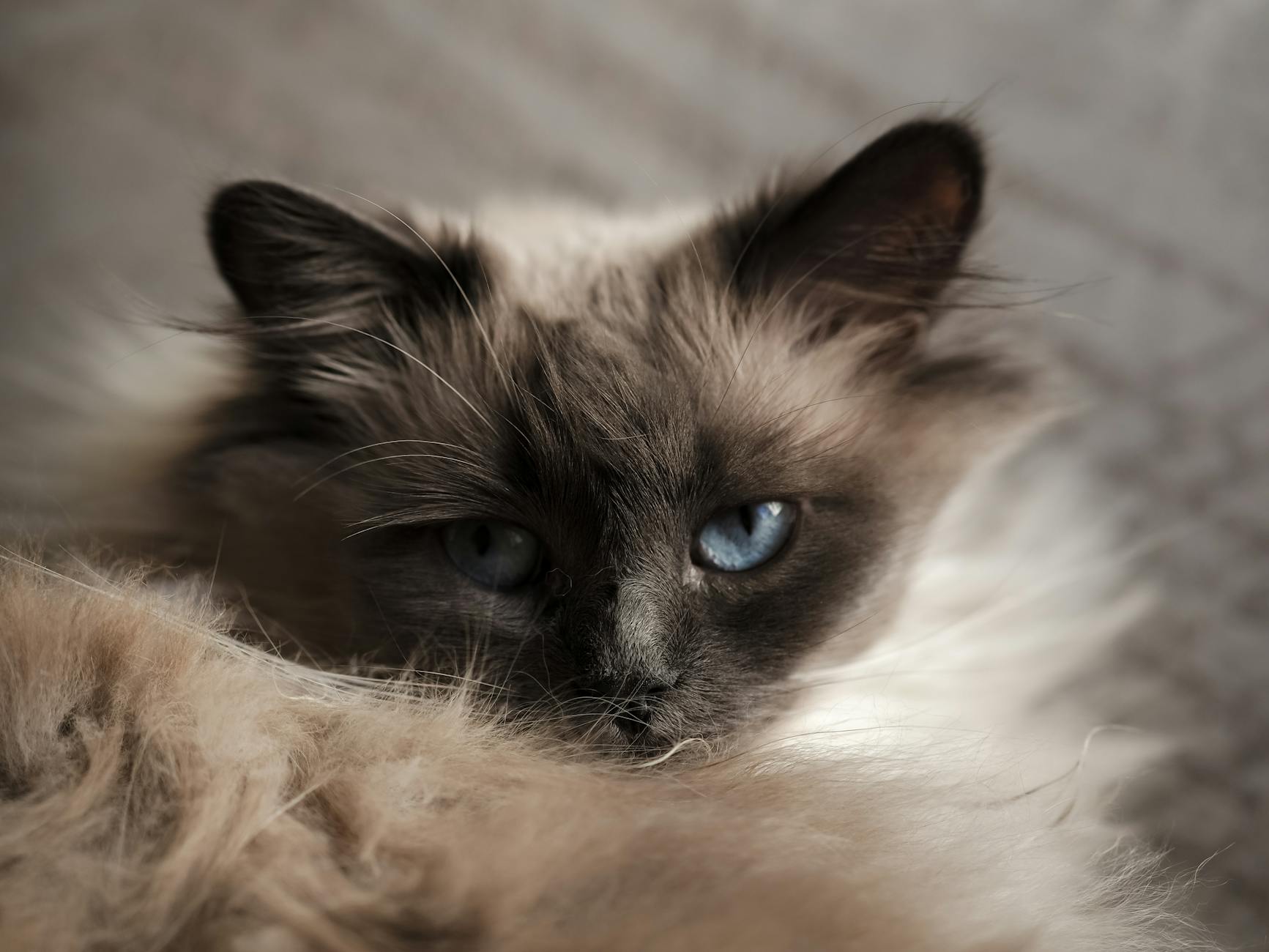
The blue-eyed cat breed that resembles the Balinese is the Javanese, a sophisticated feline that shares the Balinese’s elegant appearance while offering a broader palette of coat colors and patterns. The Javanese is technically a color division of the Balinese breed, featuring the same medium-length silky coat, distinctive plumed tail, and striking sapphire-blue eyes that make these cats so visually captivating. If you’ve encountered a cat that looks like a Balinese but comes in unexpected colors like red point, cream point, or cinnamon point rather than the traditional seal or chocolate, you were likely looking at a Javanese.
The distinction between these two related breeds comes down to color genetics. While purebred Balinese cats come exclusively in four point colors—seal, chocolate, blue, and lilac—Javanese cats can display a much wider range of colorations including red point, cream point, cinnamon point, lynx patterns, tortoiseshell, and parti-color combinations. Both breeds descend from the Siamese family and emerged from selective breeding efforts to enhance and preserve desirable traits, but the Javanese represents an expansion of those possibilities rather than a departure from the classic type.
Table of Contents
- How Does the Javanese Compare to the Balinese Breed?
- Understanding the Blue Eyes and Physical Appearance
- Personality Traits and Social Behavior of Point-Colored Longhaired Cats
- Grooming Requirements and Maintenance Considerations
- Health Considerations and Genetic Concerns
- Breeding Lines and Finding Ethical Sources
- Is a Javanese the Right Choice for Your Household?
- Conclusion
How Does the Javanese Compare to the Balinese Breed?
Understanding the relationship between Javanese and Balinese cats requires knowing their shared ancestry and eventual divergence. Both breeds originated as longhaired mutations of the Siamese cat, with the Balinese being formally recognized as a distinct breed first. The Balinese itself emerged from a natural recessive gene that produced longer coats in Siamese litters, and breeders recognized the potential to develop this into a separate, recognized breed. The Javanese came later as breeders began experimenting with the same longhaired Siamese foundation but crossing in additional color genes that expanded beyond the traditional Siamese point pattern restrictions. The Cat Fanciers’ Association (CFA) officially recognizes both the Balinese and Javanese as distinct breeds, though some breed registries classify the Javanese as a color division within the larger Balinese category.
This classification difference can cause confusion among buyers and breed enthusiasts. A practical example: if you’re looking at a purebred registry, a red-point longhaired Siamese-type cat with blue eyes will be registered as a Javanese rather than a Balinese, precisely because it falls outside the Balinese’s approved color range. This distinction matters for showing, breeding purposes, and understanding a cat’s pedigree. The physical structure and temperament remain essentially identical between the two breeds. Both have long, slender bodies, angular faces with almond-shaped blue eyes, and that characteristic kinked or plumed tail. The behavioral traits—vocal nature, high intelligence, strong bonding with humans, and demanding attention—are also shared across both breeds.

Understanding the Blue Eyes and Physical Appearance
The brilliant sapphire-blue eyes are perhaps the most striking feature of both Javanese and Balinese cats, and this eye color is genetically linked to the point coloration pattern common in Siamese-descended breeds. The blue eye color in these cats results from the absence of melanin in the iris, allowing the light to scatter in ways that produce the characteristic blue hue. This is one of the few instances in cat breeding where blue eyes are not associated with increased risk of deafness, as that genetic link primarily affects white cats. Javanese and Balinese cats typically have normal hearing and healthy vision despite their striking eye color. The coat structure requires specific attention even though these cats don’t actually have the longest coat among longhaired breeds.
Their fur is medium-length, silky, and relatively fine-textured, which makes it prone to matting if not maintained properly. This is an important limitation to understand before adopting one of these breeds. The plumed tail, while beautiful, can become matted and uncomfortable if grooming is neglected. A Javanese owner who doesn’t commit to regular brushing—at least several times per week—will likely face serious coat management problems and potential vet visits for mat removal. The contrast between the darker points (face, ears, legs, tail) and the lighter body color becomes more pronounced in certain lighting conditions. In natural light, a red-point Javanese shows warmer, peachy-cream coloring with deeper red-toned points, while a seal-point appears more dramatically contrasted with very dark brown or black points against ivory or cream body color.
Personality Traits and Social Behavior of Point-Colored Longhaired Cats
Javanese and Balinese cats are not breed choices for people seeking quiet, independent companions. These cats are among the most vocal breeds available, communicating constantly with their owners through meows, chirps, and yowls that some describe as extensive “conversations.” They form intense bonds with their chosen humans and demand considerable interactive engagement throughout the day. This vocal, demanding nature traces directly back to their Siamese ancestry, where selective breeding emphasized expressive communication and human-directed attention. Intelligence is another defining characteristic that manifests in both positive and challenging ways.
These cats can learn to play fetch, walk on leashes, and respond to voice commands—advantages if you enjoy training and interactive play. However, that same intelligence means they become destructive and mischievous when bored, often engaging in behaviors like knocking items off counters, opening cabinets, or attacking furniture. An example: a Javanese left alone for long periods may resort to destructive behaviors not out of aggression but as a form of self-entertainment and protest against being ignored. They typically do well in households with multiple cats or dogs, as their social nature extends beyond human companions. They often struggle with being the only pet and may become overly demanding with a single owner who cannot meet their need for constant interaction and stimulation.

Grooming Requirements and Maintenance Considerations
Regular grooming is non-negotiable for these cats and represents a significant ongoing commitment compared to shorthaired breeds. Most owners brush their Javanese at least three to four times per week, with daily brushing recommended during seasonal shedding periods. The fine texture of their coat makes it particularly susceptible to matting, especially behind the ears, on the tail, and in the hindquarters where cats often groom less thoroughly. This is not a breed where you can skip a week or two without consequences. Professional grooming every 4 to 8 weeks helps manage coat health, though many owners find they can handle maintenance with quality tools and consistent effort at home.
The primary tradeoff with these breeds is clear: you gain stunning appearance and elegant presence but must invest significant time in coat care. Without this commitment, the cats become uncomfortable, mats pull painfully on skin, and skin infections can develop underneath matted areas. For owners who also maintain short nails through regular trimming or scratching posts and keep ears clean, the overall grooming routine becomes manageable. Bathing is rarely necessary for indoor Javanese cats unless they get into something unusual, though some owners bathe them occasionally to maintain coat quality. The grooming process itself often becomes bonding time, and cats that are accustomed to brushing from a young age typically tolerate or even enjoy the routine.
Health Considerations and Genetic Concerns
Javanese and Balinese cats generally enjoy good health with similar genetic predispositions as their Siamese ancestors. However, they can inherit breed-specific health concerns including progressive retinal atrophy (PRA), which is a degenerative eye condition that can lead to blindness, and a genetic liver disorder called amyloidosis that affects some family lines. Reputable breeders test for these conditions and maintain genetic diversity in their breeding programs to minimize risk. A critical warning: the expansion of color genetics in Javanese breeding, while creating visual appeal, sometimes increased the risk of inherited health issues in some breeding lines.
This is why purchasing from health-tested, registered breeders matters significantly more than seeking out cats from non-registered sources. A breeder who can provide genetic testing results, multi-generation pedigrees, and health guarantees offers far greater protection than one who cannot. Additionally, these cats can be prone to kidney disease and progressive kidney issues as they age, which is common in many cat breeds but warrants regular veterinary screening, particularly after age seven. Providing fresh water access, high-quality diet, and annual veterinary checkups helps catch problems early.
Breeding Lines and Finding Ethical Sources
If you’re considering breeding or wanting to understand the genetic background of a Javanese cat, knowing reputable breeding lines matters considerably. Established breeders maintain detailed records of genetic testing, including screening for the conditions mentioned previously. The color diversity of Javanese cats actually required careful genetic engineering through selective breeding, which means some color patterns became established through specific breeding decisions made decades ago.
When searching for a Javanese kitten, contact breed registries like the CFA or The International Cat Association (TICA) to locate registered breeders who follow breed standards and conduct appropriate health testing. Breeders should be transparent about their breeding motivations, genetic testing practices, and willing to provide references from previous buyers. Adoption through breed rescue organizations is also possible, though less common than finding kittens from breeders.
Is a Javanese the Right Choice for Your Household?
Javanese cats thrive in homes where owners prioritize interaction, engagement, and consistent grooming care. They work well in homes with flexible schedules where someone is present during much of the day, or in multi-cat households where they have feline companionship. Remote workers, retired individuals, and families with older children often succeed with these cats.
They are poorly suited to households where cats will be left alone for 8+ hours regularly, where grooming is considered optional, or where silence and low-maintenance companionship is the goal. Before committing to a Javanese, honestly assess your lifestyle against these requirements. Visit breeders or rescue organizations to interact with adult cats if possible, to experience their vocal nature and personality demands firsthand. This breed rewards the right match with exceptional companionship, loyalty, and entertainment value, but mismatches result in frustrated owners and unhappy cats.
Conclusion
The Javanese cat is a blue-eyed breed that essentially answers the question of “what if we made a Balinese in different colors?” While they share the elegant structure, sapphire eyes, and demanding personality of their Balinese cousins, Javanese cats offer a broader range of coat colors and patterns that appeal to breeders and enthusiasts seeking visual diversity. Understanding that these cats require significant grooming commitment, thrive on human attention, and can develop breed-specific health issues allows prospective owners to make informed decisions.
If you’re attracted to the Balinese appearance and blue eyes but drawn to non-traditional colors, the Javanese represents your best option. Researching reputable breeders who prioritize health testing, connecting with breed clubs and registries, and honestly evaluating your ability to meet these cats’ considerable grooming and social needs will help ensure a successful match. These extraordinary cats can become beloved family members when placed in appropriate homes that appreciate their unique blend of beauty, intelligence, and demanding affection.